For those in America wishing to practice authentic, traditional Yoga,
it is useful to be aware of the state of Yoga in the country, and the
controversy surrounding it. It continues to be true that most of the
Yoga teachers in America incorrectly promote Yoga as being a mere
physical fitness program, while its spiritual roots are mostly
forgotten. It also continues to be true that some of the most
outspoken people about the true nature of Yoga as a spiritual
practice are Christians opposed to Yoga. While their specific
opinions and interpretations about Yoga may be quite inaccurate, they
are definitely right about Yoga being a spiritual practice.
Following is a link to a new anti-Yoga dvd that characterizes this:
http://www.carylmatrisciana.com/shop/catalog/Yoga-Uncoiled-From-East-
to-West-p-16188.html
DESCRIPTION: Here is a description from the link above:
YOGA UNCOILED: From East to West
A look into the practice of Yoga in the Church
Many believe they can practice yoga postures, breathing, and focusing
techniques devoid of yoga's spirituality, not realizing that yoga is
an inherent part of Hindu philosophy which teaches MAN AND NATURE ARE ONE WITH DIVINITY. [All caps added; they are right; this is a core
perspective of Yoga, Sankhya, Vedanta, and Tantra]
Today, yoga is experiencing a worldwide renaissance and in America
has more than 70,000 yoga teachers working in 20,000 locations.
Although viewed primarily as fitness instructors, these trainers are
in reality the leading missionaries of eastern religion in the west.
The twenty-seven billion dollar a year yoga industry is marketed to
students, athletes, businessmen, pregnant women and senior citizens
promising solutions for stress reduction, concentration problems, and
issues of self confidence.
Once viewed by Christians as a pagan import from the East, yoga has
now become mainstream in the church through "Christ-centered yoga
classes" designed to help improve spirituality and experience "the
presence of God". But is yoga's mysticism compatible with historic
Christianity?
Video-journalist Caryl Matrisciana, who was born and raised in India,
returns to her native land to search for truth among India's leading
experts and examines what Christian Yoga practitioners in the West
are saying about their Yoga participation.
With critical discernment, this hard-hitting and informative DVD
explores the ramifications of dismissing yoga's core spirituality,
and blending Biblical terminology and precepts with eastern
meditative techniques and practices.
Attaining Yoga or Union:
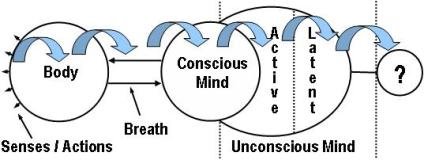
Yoga or "Union" is attained by first training, balancing, and purifying each of the aspects of our being individually, and then systematically receding attention inward through those levels, expanding so as to experience the state of Union, Yoga, Samadhi, or Turiya.
Sunday, July 08, 2007
Maranatha Mantra Christian Yoga Meditation - VIDEO (7:00 minutes)
CHRISTIAN YOGA MEDITATION
Video (7:00 minutes)
Swami Jnaneshvara Bharati
Click here:
http://youtube.com/watch?v=Brwr6UxLda4
Maranatha is Aramaic for "Come Lord," and is a prayer or mantra of
Christian tradition. Breathe with inhalation and exhalation of Ma-Ra-Na-
Tha. The mantra can be very useful for those practicing Yoga meditation.
http://www.swamij.com/
Video (7:00 minutes)
Swami Jnaneshvara Bharati
Click here:
http://youtube.com/watch?v=Brwr6UxLda4
Maranatha is Aramaic for "Come Lord," and is a prayer or mantra of
Christian tradition. Breathe with inhalation and exhalation of Ma-Ra-Na-
Tha. The mantra can be very useful for those practicing Yoga meditation.
http://www.swamij.com/


Bad News and Good News in Yoga Meditation
BAD NEWS AND GOOD NEWS IN YOGA MEDITATION
Swami Jnaneshvara Bharati
There is bad news and good news in the inner journey of enlightenment
through Yoga Meditation. The bad news is that some unpleasant
obstacles naturally come. The good news is that there are ways to
deal with those obstacles. However, two things are needed:
1) We need to understand those methods.
2) We need to actually practice them!! :)
With gentle, loving persistence those practices become easier and easier. We need to be ever mindful of these principles and allow them to become a part of our daily lives. Admitedly, this is much easier to say than to do. Still, it is true that gently, lovingly, patiently, and persistently practicing brings the fruits, along with remembering that, in a sense, there is nothing at all to do other than let go of our attachments and aversions, and allow the pure consciousness, truth, purusha, atman, or light to come shining through.
OBSTACLES AND SOLUTIONS
(Yoga Sutras 1.30-1.32)
The "bad" news:
Nine kinds of distractions come that are obstacles naturally
encountered on the path:
1) physical illness
2) tendency of the mind to not work efficiently
3) doubt or indecision
4) lack of attention to pursuing the means of samadhi
5) laziness in mind and body
6) failure to regulate the desire for worldly objects
7) incorrect assumptions or thinking
8) failing to attain stages of the practice
9) instability in maintaining a level of practice once attained.
More "bad" news:
From these obstacles, there are four other consequences that also
arise, and these are:
1) mental or physical pain,
2) sadness or dejection,
3) restlessness, shakiness, or anxiety, and
4) irregularities in the exhalation and inhalation of breath.
The "good" news:
To prevent or deal with these nine obstacles and their four
consequences, the recommendation is to make the mind one-pointed,
training it how to focus on a single principle or object.
STABILIZING AND CLEARING THE MIND
(Yoga Sutras 1.33-1.39)
More "good" news:
In relationships, the mind becomes purified by cultivating feelings
of friendliness towards those who are happy, compassion for those who
are suffering, goodwill towards those who are virtuous, and
indifference or neutrality towards those we perceive as wicked or
evil.
The mind is also calmed by regulating the breath, particularly
attending to exhalation and the natural stilling of breath that comes
from such practice.
The inner concentration on the process of sensory experiencing, done
in a way that leads towards higher, subtle sense perception; this
also leads to stability and tranquility of the mind.
Or concentration on a painless inner state of lucidness and
luminosity also brings stability and tranquility.
Or contemplating on having a mind that is free from desires, the mind
gets stabilized and tranquil.
Or by focusing on the nature of the stream in the dream state or the
nature of the state of dreamless sleep, the mind becomes stabilized
and tranquil.
Or by contemplating or concentrating on whatever object or principle
one may like, or towards which one has a predisposition, the mind
becomes stable and tranquil.
http:www.swamij.com
http:www.swamij.com/yoga-sutras.htm
Swami Jnaneshvara Bharati
There is bad news and good news in the inner journey of enlightenment
through Yoga Meditation. The bad news is that some unpleasant
obstacles naturally come. The good news is that there are ways to
deal with those obstacles. However, two things are needed:
1) We need to understand those methods.
2) We need to actually practice them!! :)
With gentle, loving persistence those practices become easier and easier. We need to be ever mindful of these principles and allow them to become a part of our daily lives. Admitedly, this is much easier to say than to do. Still, it is true that gently, lovingly, patiently, and persistently practicing brings the fruits, along with remembering that, in a sense, there is nothing at all to do other than let go of our attachments and aversions, and allow the pure consciousness, truth, purusha, atman, or light to come shining through.
OBSTACLES AND SOLUTIONS
(Yoga Sutras 1.30-1.32)
The "bad" news:
Nine kinds of distractions come that are obstacles naturally
encountered on the path:
1) physical illness
2) tendency of the mind to not work efficiently
3) doubt or indecision
4) lack of attention to pursuing the means of samadhi
5) laziness in mind and body
6) failure to regulate the desire for worldly objects
7) incorrect assumptions or thinking
8) failing to attain stages of the practice
9) instability in maintaining a level of practice once attained.
More "bad" news:
From these obstacles, there are four other consequences that also
arise, and these are:
1) mental or physical pain,
2) sadness or dejection,
3) restlessness, shakiness, or anxiety, and
4) irregularities in the exhalation and inhalation of breath.
The "good" news:
To prevent or deal with these nine obstacles and their four
consequences, the recommendation is to make the mind one-pointed,
training it how to focus on a single principle or object.
STABILIZING AND CLEARING THE MIND
(Yoga Sutras 1.33-1.39)
More "good" news:
In relationships, the mind becomes purified by cultivating feelings
of friendliness towards those who are happy, compassion for those who
are suffering, goodwill towards those who are virtuous, and
indifference or neutrality towards those we perceive as wicked or
evil.
The mind is also calmed by regulating the breath, particularly
attending to exhalation and the natural stilling of breath that comes
from such practice.
The inner concentration on the process of sensory experiencing, done
in a way that leads towards higher, subtle sense perception; this
also leads to stability and tranquility of the mind.
Or concentration on a painless inner state of lucidness and
luminosity also brings stability and tranquility.
Or contemplating on having a mind that is free from desires, the mind
gets stabilized and tranquil.
Or by focusing on the nature of the stream in the dream state or the
nature of the state of dreamless sleep, the mind becomes stabilized
and tranquil.
Or by contemplating or concentrating on whatever object or principle
one may like, or towards which one has a predisposition, the mind
becomes stable and tranquil.
http:www.swamij.com
http:www.swamij.com/yoga-sutras.htm
Thursday, July 05, 2007
Soham Mantra Yoga Meditation - Video (8:00 minutes)
SOHAM MANTRA YOGA MEDITATION
Video (8:00 minutes)
Swami Jnaneshvara Bharati
Click here:
http://youtube.com/watch?v=JKNzaWGm0o8
Soham is a universal mantra of Yoga meditation, as it relates to the
breath, and everybody breaths. It is a Sanskrit word that means "I am
that," or "I am that I am."
http://www.swamij.com
Video (8:00 minutes)
Swami Jnaneshvara Bharati
Click here:
http://youtube.com/watch?v=JKNzaWGm0o8
Soham is a universal mantra of Yoga meditation, as it relates to the
breath, and everybody breaths. It is a Sanskrit word that means "I am
that," or "I am that I am."
http://www.swamij.com
Thursday, June 14, 2007
In Your Meditation Today (Video)
VIDEO (55 seconds):
http://www.youtube.com/watch?v=A7Hbb-BCisk
In your meditation today...
May your body be still and comfortable....
May your head, neck and trunk be aligned....
May your breath be smooth, slow, serene,
and with no pauses....
May the flow of thoughts in your mind
not disturb you....
May your meditation today bring you peace,
happiness and bliss....
http://swamij.com/
http://www.youtube.com/watch?v=A7Hbb-BCisk
In your meditation today...
May your body be still and comfortable....
May your head, neck and trunk be aligned....
May your breath be smooth, slow, serene,
and with no pauses....
May the flow of thoughts in your mind
not disturb you....
May your meditation today bring you peace,
happiness and bliss....
http://swamij.com/
Swami Rama University - Dehradun, India
SWAMI RAMA UNIVERSITY
June 7, 2007
We are happy to share this good news with you that the Government of India has granted us deemed university status. Now we will be known as Swami Rama University.
Vijay Dhasmana
Himalayan Institute Hospital Trust
Dehradun, India
http://www.hihtindia.org/
"I have a great fire within me to build this great hospital which will serve people, particularly poor people. The people of the mountains of Kumaon and Garhwal regions are very poor. Hospitals are far away and people die before they reach the hospital. I want to give them all the modern amenities and facilities so that they don't have to rush to Bombay, Delhi, or Chandigarh." ---- H.H.Dr.Swami Rama
The Himalayan Institute Hospital Trust opened in 1994 with 250 beds and currently has 750 beds with plans for further expansion upto 2,000 beds.The hospital is serving approximately 10 million poor and needy people of Garhwal, Kumaon and adjoining areas. The Himalayan Institute Hospital offers various services previously not locally available in this entire region of Garhwal Himalayas.
The site of the HIHT Medical City is in Uttaranchal. The state has scattered villages in the mountains where facilities of Health, Education, Water, Transport & Electricity are not available. It is also among the poorest regions in terms of medical resources and among the most needy in terms of high infant mortality and shortened lifespan. It also has the largest number of people living in poverty. The Himalayan Institute Hospital Trust was created to help address these serious needs.
Mission
The mission of the Institute is to develop integrated and cost- effective approaches to health care and development that address the local population, and which can serve as a model for the country as a whole, and for the under served population worldwide. A combined approach in which traditional systems of health care complement modern medicine and advanced technology is the prime focus of clinical care, medical education, and research at HIHT.
The Himalayan Institute Hospital Trust has been conceived, designed, and orchestrated by Sri Swami Rama, a yogi, scientist, researcher, writer, and humanitarian, who was born in northern India. Throughout his entire life, whether with individual students or entire communities, Swamiji gave and gave without expecting anything in return. He worked day and night teaching students, writing books, and building institutions. In his writings and personal teachings, he always encouraged readers and listeners to develop their capacity for selfless service and to devote themselves to the well - being of their communities, nations, and all of humanity.
June 7, 2007
We are happy to share this good news with you that the Government of India has granted us deemed university status. Now we will be known as Swami Rama University.
Vijay Dhasmana
Himalayan Institute Hospital Trust
Dehradun, India
http://www.hihtindia.org/
"I have a great fire within me to build this great hospital which will serve people, particularly poor people. The people of the mountains of Kumaon and Garhwal regions are very poor. Hospitals are far away and people die before they reach the hospital. I want to give them all the modern amenities and facilities so that they don't have to rush to Bombay, Delhi, or Chandigarh." ---- H.H.Dr.Swami Rama
The Himalayan Institute Hospital Trust opened in 1994 with 250 beds and currently has 750 beds with plans for further expansion upto 2,000 beds.The hospital is serving approximately 10 million poor and needy people of Garhwal, Kumaon and adjoining areas. The Himalayan Institute Hospital offers various services previously not locally available in this entire region of Garhwal Himalayas.
The site of the HIHT Medical City is in Uttaranchal. The state has scattered villages in the mountains where facilities of Health, Education, Water, Transport & Electricity are not available. It is also among the poorest regions in terms of medical resources and among the most needy in terms of high infant mortality and shortened lifespan. It also has the largest number of people living in poverty. The Himalayan Institute Hospital Trust was created to help address these serious needs.
Mission
The mission of the Institute is to develop integrated and cost- effective approaches to health care and development that address the local population, and which can serve as a model for the country as a whole, and for the under served population worldwide. A combined approach in which traditional systems of health care complement modern medicine and advanced technology is the prime focus of clinical care, medical education, and research at HIHT.
The Himalayan Institute Hospital Trust has been conceived, designed, and orchestrated by Sri Swami Rama, a yogi, scientist, researcher, writer, and humanitarian, who was born in northern India. Throughout his entire life, whether with individual students or entire communities, Swamiji gave and gave without expecting anything in return. He worked day and night teaching students, writing books, and building institutions. In his writings and personal teachings, he always encouraged readers and listeners to develop their capacity for selfless service and to devote themselves to the well - being of their communities, nations, and all of humanity.
Now, Then, and Therefore Yoga is Explained - Swami Rama
http://www.swamij.com/swami-rama-now-then-therefore.htm
From Samadhi: The Highest State of Wisdom
Volume One of Yoga the Sacred Science
(Lectures on the Yoga Sutras)
By Swami Rama
ISBN 8188157015
Reprinted with permission of the Publisher
Copyright Himalayan Institute Hospital Trust
http://hihtindia.org/
Swami Rama Foundation
http://www.swamiramafoundation.us/
Now, then, and therefore yoga discipline is being expounded. Atha yoganushasanam. The first word that has been used is now. Nowhere else has this word been used in quite the way it is used here. Now is very important. Now means, “Now, then, and therefore.” This means that there are preliminaries before you practice yoga science. The word now indicates that you have already completed the preliminaries. Now you want to attain more; you want to learn more; you want to understand more; you want to practice more.
When a teacher says, “Now do this,” it means you have done something previously and you are ready to do something else now. A student should first be prepared and then choose the path of attainment. The first sutra explains indirectly, in a very subtle way, the role of the student. Yoga is a discipline and those who want to discipline themselves, who understand the importance of this discipline, should prepare themselves to learn, study, and practice yoga with mind, action, and speech. The qualification of a student is to prepare himself or herself not only to study and memorize the sutras, but also to practice.
Patanjali studied the mind on all levels and he describes several varieties of students: some are prepared, some are preparing, some are not at all prepared, and some are totally confused. These are not fit enough for preparation, so they are out of the question. Patanjali has put all levels of mind into five categories: kshipta, vikshipta, mudha, ekagra, and niruddha. Kshipta is a completely distracted mind. Vikshipta applies to those who have no control over their mind. They do not have a concentrated mind, but if they make effort, they can learn. Sometimes they understand and sometimes they do not understand because of their lack of attention. Their minds are not yet properly trained, but they are capable of being trained and accepted. That mind which remains in a state of stupor is called mudha. Ekagra refers to those who have a concentrated mind and can concentrate well. Niruddha describes those whose mind is completely under their control. They have trained their mind perfectly and can use it as they wish.
It is easy for a competent teacher to assess the mental condition of the student. When the student comes, the teacher can know what the problem is by the way the student walks. The teacher should know what type of mind the student has, whether the student is capable of studying this science or not, and if he is prepared. When the student comes, the teacher puts him in one of the categories. Has he got vikshipta mind? Is he mudha? Has he got ekagra or one-pointed mind? Has he got a completely controlled mind—niruddha? On this basis, the teacher immediately knows how to approach the student. This is like giving a prescription to a patient. If the teacher is wise and understands, he knows this.
When you are prepared, when you have completed the preliminaries, then the teacher tells you to do something else. The preliminaries are not described here. What the teacher said before now, only the student and teacher know. To study and practice and apply the sutras in your daily life, you have to prepare yourself. Now means you are prepared to study the sutras, to practice the sutras. Now you come to me. The word now indicates that you are fully prepared and it is a good time for you to start the next step. Now it is good that you are becoming aware of Reality. It is good that you want to know more. Whatever you have done so far is accepted. Now, here begins the exposition of yoga science. That has not been done yet. So far you have not learned it.
So the teacher says, “Now.” You use this word from morning until evening but you do not understand what it means. Anyone who does not meditate cannot understand the word now. When you start examining your mind, you discover that mind is conditioned by three things—time, space, and causation. Time is a filter. Anything that happens goes through the filter of time. Today you may be sad and very worried and you may even be thinking of committing suicide. The next day, if I ask you if you are going to commit suicide, you will say no. If you give yourself time, later you will find that you do not feel that thing so much. The mind is conditioned by past, present, and future. The mind functions on the experiences of the past, or, on the basis of those experiences, on the imaginations of the future. Either you brood on the past, or you think of the future, but where is now? Now is missing. You do not know how to live here and now. What is the best period of a person’s life? It is not that which you have spent already or the aspect of time you are going to utilize in the future. It is now. Utilize the best period of your life today and now. Can you really explain where that now is? You can spell the word, but you can never taste it. The moment you talk of now, it slips to the valley of the past. When you say now, then there is no now. It is not there. How many of you enjoy now? You plan for your vacation next year, you plan for going out for dinner and dancing, but what happens now? You know the word, you know the meaning, but you do not know how to enjoy it. Your mind either goes into the grooves of past experiences or future imagination. It has never realized now. But if there is no now, then where is the link between past and future? In your daily life you postpone your happiness because you do not know how to be in the present. Now is missing in your life. If you can get freedom from past experiences and you can stop your mind from imagining the future, you will enjoy now. If you learn how to make your mind free from time, you will be beyond all this. Fortunate are those who meditate and live in the now. Through meditation you can enjoy now. It is in now that there is enjoyment, or part of eternity. The moment you come to know now you will know past, present, and future; you will be free.
The other conditions of mind are space and causation. If I hold up my hand and show you two separate fingers, what is the “cause” of these two fingers? The hand is the cause that creates the awareness of fingers. When I hold my fingers apart, they seem separate. If the hand were not there, then it would not create the space between the two fingers. This is called causation—that which creates effect. If I hold the two fingers together, there is no space between them and there will be no sense of time. Then it is one with causation. My fingers are still part of one whole. Mind can be freed from these three conditionings. So many thoughts come and you call it the thinking process. There is a space between two thoughts. But if there is no space between two thoughts, then what will happen to time? Time will not exist. If there is only one thought, what will be the condition of space? There will be no space at all. Time and space are variations of the same thing. If there is only one thought in the mind, then time cannot affect the mind. One cannot attain the highest state of samadhi without gaining freedom from the conditionings of the mind. When mind can fathom the boundaries of time, then mind can realize the subtler levels of consciousness and transform itself. Then, it can lead you to a state of peace, happiness, and joy. If mind is free from imagination—I am not talking about creative imagination—and from the memories of the past, then mind can be brought to a state of now. If you learn to train your mind to be here and now, you will know everything. There is nothing to be known beyond that. Now is part of eternity. When a teacher teaches you, first learn how to be here and now, for you have completed the preliminaries. Now, learn to understand the word now.
Patanjali leads you to an inward journey. His first lesson is, You have to discipline yourself. Now, then, therefore, go aspire. Before you study yoga science, you should be fully prepared, because it requires discipline.
----------------------------------------------------------
Yoga Nidra Meditation: Extreme Relaxation of Conscious Deep Sleep
ISBN 0972471901
One of the deepest and most popular meditation CDs in the world today.
Yoga Nidra Article at SwamiJ.com
Yoga Nidra CD at Amazon.com
From Samadhi: The Highest State of Wisdom
Volume One of Yoga the Sacred Science
(Lectures on the Yoga Sutras)
By Swami Rama
ISBN 8188157015
Reprinted with permission of the Publisher
Copyright Himalayan Institute Hospital Trust
http://hihtindia.org/
Swami Rama Foundation
http://www.swamiramafoundation.us/
Now, then, and therefore yoga discipline is being expounded. Atha yoganushasanam. The first word that has been used is now. Nowhere else has this word been used in quite the way it is used here. Now is very important. Now means, “Now, then, and therefore.” This means that there are preliminaries before you practice yoga science. The word now indicates that you have already completed the preliminaries. Now you want to attain more; you want to learn more; you want to understand more; you want to practice more.
When a teacher says, “Now do this,” it means you have done something previously and you are ready to do something else now. A student should first be prepared and then choose the path of attainment. The first sutra explains indirectly, in a very subtle way, the role of the student. Yoga is a discipline and those who want to discipline themselves, who understand the importance of this discipline, should prepare themselves to learn, study, and practice yoga with mind, action, and speech. The qualification of a student is to prepare himself or herself not only to study and memorize the sutras, but also to practice.
Patanjali studied the mind on all levels and he describes several varieties of students: some are prepared, some are preparing, some are not at all prepared, and some are totally confused. These are not fit enough for preparation, so they are out of the question. Patanjali has put all levels of mind into five categories: kshipta, vikshipta, mudha, ekagra, and niruddha. Kshipta is a completely distracted mind. Vikshipta applies to those who have no control over their mind. They do not have a concentrated mind, but if they make effort, they can learn. Sometimes they understand and sometimes they do not understand because of their lack of attention. Their minds are not yet properly trained, but they are capable of being trained and accepted. That mind which remains in a state of stupor is called mudha. Ekagra refers to those who have a concentrated mind and can concentrate well. Niruddha describes those whose mind is completely under their control. They have trained their mind perfectly and can use it as they wish.
It is easy for a competent teacher to assess the mental condition of the student. When the student comes, the teacher can know what the problem is by the way the student walks. The teacher should know what type of mind the student has, whether the student is capable of studying this science or not, and if he is prepared. When the student comes, the teacher puts him in one of the categories. Has he got vikshipta mind? Is he mudha? Has he got ekagra or one-pointed mind? Has he got a completely controlled mind—niruddha? On this basis, the teacher immediately knows how to approach the student. This is like giving a prescription to a patient. If the teacher is wise and understands, he knows this.
When you are prepared, when you have completed the preliminaries, then the teacher tells you to do something else. The preliminaries are not described here. What the teacher said before now, only the student and teacher know. To study and practice and apply the sutras in your daily life, you have to prepare yourself. Now means you are prepared to study the sutras, to practice the sutras. Now you come to me. The word now indicates that you are fully prepared and it is a good time for you to start the next step. Now it is good that you are becoming aware of Reality. It is good that you want to know more. Whatever you have done so far is accepted. Now, here begins the exposition of yoga science. That has not been done yet. So far you have not learned it.
So the teacher says, “Now.” You use this word from morning until evening but you do not understand what it means. Anyone who does not meditate cannot understand the word now. When you start examining your mind, you discover that mind is conditioned by three things—time, space, and causation. Time is a filter. Anything that happens goes through the filter of time. Today you may be sad and very worried and you may even be thinking of committing suicide. The next day, if I ask you if you are going to commit suicide, you will say no. If you give yourself time, later you will find that you do not feel that thing so much. The mind is conditioned by past, present, and future. The mind functions on the experiences of the past, or, on the basis of those experiences, on the imaginations of the future. Either you brood on the past, or you think of the future, but where is now? Now is missing. You do not know how to live here and now. What is the best period of a person’s life? It is not that which you have spent already or the aspect of time you are going to utilize in the future. It is now. Utilize the best period of your life today and now. Can you really explain where that now is? You can spell the word, but you can never taste it. The moment you talk of now, it slips to the valley of the past. When you say now, then there is no now. It is not there. How many of you enjoy now? You plan for your vacation next year, you plan for going out for dinner and dancing, but what happens now? You know the word, you know the meaning, but you do not know how to enjoy it. Your mind either goes into the grooves of past experiences or future imagination. It has never realized now. But if there is no now, then where is the link between past and future? In your daily life you postpone your happiness because you do not know how to be in the present. Now is missing in your life. If you can get freedom from past experiences and you can stop your mind from imagining the future, you will enjoy now. If you learn how to make your mind free from time, you will be beyond all this. Fortunate are those who meditate and live in the now. Through meditation you can enjoy now. It is in now that there is enjoyment, or part of eternity. The moment you come to know now you will know past, present, and future; you will be free.
The other conditions of mind are space and causation. If I hold up my hand and show you two separate fingers, what is the “cause” of these two fingers? The hand is the cause that creates the awareness of fingers. When I hold my fingers apart, they seem separate. If the hand were not there, then it would not create the space between the two fingers. This is called causation—that which creates effect. If I hold the two fingers together, there is no space between them and there will be no sense of time. Then it is one with causation. My fingers are still part of one whole. Mind can be freed from these three conditionings. So many thoughts come and you call it the thinking process. There is a space between two thoughts. But if there is no space between two thoughts, then what will happen to time? Time will not exist. If there is only one thought, what will be the condition of space? There will be no space at all. Time and space are variations of the same thing. If there is only one thought in the mind, then time cannot affect the mind. One cannot attain the highest state of samadhi without gaining freedom from the conditionings of the mind. When mind can fathom the boundaries of time, then mind can realize the subtler levels of consciousness and transform itself. Then, it can lead you to a state of peace, happiness, and joy. If mind is free from imagination—I am not talking about creative imagination—and from the memories of the past, then mind can be brought to a state of now. If you learn to train your mind to be here and now, you will know everything. There is nothing to be known beyond that. Now is part of eternity. When a teacher teaches you, first learn how to be here and now, for you have completed the preliminaries. Now, learn to understand the word now.
Patanjali leads you to an inward journey. His first lesson is, You have to discipline yourself. Now, then, therefore, go aspire. Before you study yoga science, you should be fully prepared, because it requires discipline.
----------------------------------------------------------
Yoga Nidra Meditation: Extreme Relaxation of Conscious Deep Sleep
ISBN 0972471901
One of the deepest and most popular meditation CDs in the world today.
Yoga Nidra Article at SwamiJ.com
Yoga Nidra CD at Amazon.com
----------------------------------------------------------

Subscribe to:
Posts (Atom)


