Attaining Yoga or Union:

Attaining Yoga or Union:
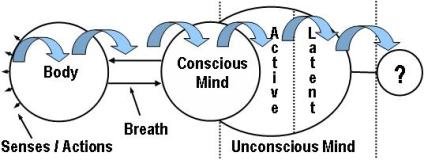
Yoga or "Union" is attained by first training, balancing, and purifying each of the aspects of our being individually, and then systematically receding attention inward through those levels, expanding so as to experience the state of Union, Yoga, Samadhi, or Turiya.
Showing posts with label hatha yoga. Show all posts

Saturday, December 29, 2012

Review of The Science of Yoga


Review of The Science of Yoga,
a book by William J. Broad
Review by Swami Jnaneshvara Bharati

There is a widespread misunderstanding of the nature of yoga that is well exemplified by William J. Broad in his book “The Science of Yoga”. Broad says in the Introduction that the book is about “postural yoga”, but he never again uses that term. Instead, he subsequently uses the single word “yoga”, implying that yoga and postures (postural yoga) are one and the same, which is the common cultural myth of our times. The degree to which he had done this was not immediately apparent to me; it took several readings to see the problem clearly. 

Broad says that we are now in a period of yoga 2.0 and predicts that in the next two to three hundred years we will see the coming of yoga 3.0 and yoga 4.0. However, he says that his baseline period--yoga 1.0--is the medieval ages, completely ignoring the previous thousands of years of yoga history, which includes the yoga of the Vedas, Upanishads, Bhagavad Gita, and Yoga Sutras.

Broad says that the yoga of Patanjali (the Yoga Sutra) is “old yoga”, apparently in contrast to his views of “new yoga”. However, this new yoga bears no resemblance to the old yoga (using his term for clarity, not meaning that I agree with him). Broad also uses the phrase “modern yoga” a few times. If Broad’s categories align with today’s common view of yoga, then we can see that the current yoga is “not yoga” compared to the yoga of the ancient sages. There is almost nothing to be found of modern yoga, yoga 2.0, or not yoga in any of these ancient descriptions of yoga that would be part of old yoga. 

We can get a clearer understanding of Broad’s book by mentally inserting the term “postural yoga” wherever he uses only the single word “yoga”. We can also mentally insert “not yoga” or “modern yoga” wherever he used only the single word “yoga”. These three exercises gives a very different feel to the book, making clear Broad’s disregard, if not disdain for the traditional meaning of yoga. In other words, Broad sees yoga only as a physical process dealing with fitness and health/medical treatments, and he writes from that perspective alone.

Once we see that Broad is talking only about the modern devolutions of yoga, it is easy to assess the quality and usefulness of his writing from within that limited scope. He has written an extremely clear and useful book about postural yoga or modern yoga or not yoga, as well as clearly summarizing the risks and benefits of those categories. However, although it is obviously not his intent, he has also done a great job of outlining the devolution of yoga in the past hundred years or so. 

I encountered only one place where Broad uses the term “traditional yoga”, a term I and others have used to contrast the yoga of the sages from modern yoga. However, he uses the term traditional yoga not to refer to the yoga of the sages, but to postural hatha yoga before it was altered/hijacked by the innovators such as Krishnamacharya, Jois, and Iyengar. 

I highly recommend this book. It gives great summaries of the potential dangers of modern postural yoga (not yoga), as well as physical fitness and health benefits, and if you read closely, also maps out the way in which yoga has been distorted in recent years. You may also notice that Broad offers no evidence or research whatsoever showing any danger in practicing the introspective methods of yoga as explained by the practitioners and teachers of old yoga (known simply as yoga). Apparently the dangers he presents only apply to not yoga, the modern distortions of yoga. 

There was not a single example of anybody experiencing any health problems from sitting quietly doing the introspective practices of meditation and contemplation, which are characteristic of yoga done for its original purpose, Self-realization. It would be interesting to see research on the risks and rewards of these meditation and contemplation practices of old yoga, but this is not the subject of Broad’s book. That may be very difficult research since so few people are practicing or interested in this.

Wednesday, February 18, 2009

VIDEO (8:12 min): The Truth about the 10 Reasons for Yoga

NEW VIDEO (8:12 Minutes)

THE TRUTH ABOUT THE 10 REASONS FOR YOGA
By Swami Jnaneshvara Bharati
http://www.swamij.com/

VIDEO is at YouTube:
http://www.youtube.com/watch?v=mwcKxsYHm3c

Yoga Day USA lists "Top 10 Reasons to Try Yoga for Life"
on their website www.YogaDayUSA.org

Unfortunately, most of their
reasons have little to do with
authentic, traditional Yoga.

REASON #1. YOGA FOR … STRESS RELIEF:
Yoga reduces the physical effects of stress on
the body. By encouraging relaxation, yoga helps
to lower the levels of the stress hormone cortisol.
Related benefits include lowering blood pressure
and heart rate, improving digestion and boosting
the immune system as well as easing symptoms
of conditions such as anxiety, depression, fatigue,
asthma and insomnia.

THE TRUTH ABOUT YOGA:
Most people in the West, and also many in India,
confuse Yoga with Hatha Yoga, the system of
bodily postures. But Yoga is primarily a spiritual
discipline.
(Paramahansa Yogananda)

REASON #2. YOGA FOR … PAIN RELIEF:
Yoga can ease pain. Studies have demonstrated that
practicing yoga asanas (postures), meditation or a
combination of the two, reduced pain for people
with conditions such as cancer, multiple sclerosis,
auto-immune diseases and hypertension as well as
arthritis, back and neck pain and other chronic
conditions. Some practitioners report that even
emotional pain can be eased through the practice
of yoga.

THE TRUTH ABOUT YOGA:
Yoga has become the health and fitness system
of choice. This is odd because it is the mind -
not the body - that is the main target of all genuine
Yoga practices .... To regard Yoga primarily as a
set of practices for increasing strength and
flexibility while calming the nervous system is
to mistake the husk for the kernel.
(Pandit Rajmani Tigunait)

REASON #3. YOGA FOR … BETTER BREATHING:
Yoga teaches people to take slower, deeper breaths.
This helps to improve lung function, trigger the
body's relaxation response and increase the amount
of oxygen available to the body.

THE TRUTH ABOUT YOGA:
Like many arts and sciences that are profound,
beautiful, and powerful, yoga has suffered from
the spiritual poverty of the modern world--it has
been trivialized, watered down, or reduced to
cliches. The deep and eternal essence of yoga
has been misrepresented and packaged for
personal profit by clever people.
(Bhole Prabhu)

REASON #4. YOGA FOR … FLEXIBILITY:
Yoga helps to improve flexibility and mobility,
increasing range of movement and reducing aches
and pains. Many people can't touch their toes during
their first yoga class. Gradually they begin to use the
correct muscles. Over time, the ligaments, tendons
and muscles lengthen, increasing elasticity, making
more poses possible. Yoga also helps to improve body
alignment resulting in better posture and helping to
relieve back, neck, joint and muscle problems.

THE TRUTH ABOUT YOGA:
In ancient times hatha Yoga was practiced for
many years as a preparation for higher states of
consciousness. Now however, the real purpose
of this great science is being altogether forgotten .
The hatha Yoga practices which were designed
by the rishis and sages of old, for the evolution
of mankind, are now being understood and
utilized in a very limited sense.
(Swami Satyananda Saraswati)

REASON #5. YOGA FOR … INCREASED STRENGTH:
Yoga asanas (postures) use every muscle in the
body, helping to increase strength literally from
head to toe. And, while these postures strengthen
the body, they also provide an additional benefit
of helping to relieve muscular tension.

THE TRUTH ABOUT YOGA:
Yoga is not mere acrobatics . Some people suppose
that Yoga is primarily concerned with the
manipulation of the body into various queer
positions, standing on the head, for instance, or
twisting about the spine, or assuming any of the
numerous odd poses which are demonstrated in
the text-books on Yoga. These techniques are
correctly employed in one distinct type of Yoga
practice, but they do not form an integral part of
the most essential type. Physical posture serve
at best as an auxiliary, or a minor form of Yoga.
(Swami Chidananda Saraswati)

REASON #6. YOGA FOR …
WEIGHT MANAGEMENT:
Yoga (even less vigorous styles) can aid weight
control efforts by reducing the cortisol levels
as well as by burning excess calories and
reducing stress. Yoga also encourages healthy
eating habits and provides a heightened sense of
well being and self esteem.

THE TRUTH ABOUT YOGA:
Many false and incomplete teachings have been
propagated in its name, it has been subject to
commercial exploitation, and one small aspect
of Yoga is often taken to be all of Yoga. For
instance, many people in the West think it is a
physical and beauty cult, while others think it
is a religion. All of this has obscured the real
meaning of Yoga.
(Swami Rama)

REASON #7. YOGA FOR …
IMPROVED CIRCULATION:
Yoga helps to improve circulation and, as a result
of various poses, more efficiently moves
oxygenated blood to the body's cells.

THE TRUTH ABOUT YOGA:
Through the discipline of Yoga, both actions and
intelligence go beyond these qualities [gunas] and
the seer comes to experience his own soul with
crystal clarity, free from the relative attributes of
nature and actions. This state of purity is samadhi.
Yoga is thus both the means and the goal. Yoga
is samadhi and samadhi is Yoga.
(B. K. S. Iyengar)

REASON #8. YOGA FOR …
CARDIOVASCULAR CONDITIONING:
Even gentle yoga practice can provide cardio-vascular
benefits by lowering resting heart rate, increasing
endurance and improving oxygen uptake during
exercise.

THE TRUTH ABOUT YOGA:
The main objective of hatha Yoga is to create an
absolute balance of the interacting activities and
processes of the physical body, mind and energy.
When this balance is created, the impulses
generated give a call of awakening to the central
force (sushumna nadi) which is responsible for
the evolution of human consciousness. If hatha
Yoga is not used for this purpose, its true
objective is lost.
(Swami Satyananda Saraswati)

REASON #9. YOGA FOR …
FOCUS ON THE PRESENT:
Yoga helps us to focus on the present, to become
more aware and to help create mind body health.
It opens the way to improved concentration,
coordination, reaction time and memory.

THE TRUTH ABOUT YOGA:
The goal of Yoga is Yoga itself, union itself, of the
little self and the True Self, a process of awakening
to the preexisting union that is called Yoga.
Yoga has to do with the realization through direct
experience of the preexisting union between Atman
and Brahman, Jivatman and Paramatman, and
Shiva and Shakti, or the realization of Purusha
standing alone as separate from Prakriti.
(Swami Jnaneshvara Bharati)

REASON #10. YOGA FOR … INNER PEACE:
The meditative aspects of yoga help many to reach
a deeper, more spiritual and more satisfying place
in their lives. Many who begin to practice for
other reasons have reported this to be a key reason
that yoga has become an essential part of their
daily lives.
(This finally touches on the real reasons for Yoga
by mentioning that it is for "spiritual" reasons.)

THE TRUTH ABOUT YOGA:
You use the body as a medium to bring the mind
back to the brain. Perfect marriage between body
and mind. Then, you can reach and knock the
door to the spirit....
Yoga is free. It belongs to the earth. It's a god.
(Bikram Choudhury)

Sunday, March 02, 2008

VIDEO (2 min): What Yoga has Become in America

NEW VIDEO (2:00 Minutes)

What Yoga has Become in America
By Swami Jnaneshvara Bharati

VIDEO at YouTube:
http://www.youtube.com/watch?v=An4LwizAVFo

For more information about what Yoga has become in America, please see:
http://www.swamij.com/traditional-yoga.htm