Attaining Yoga or Union:

Attaining Yoga or Union:
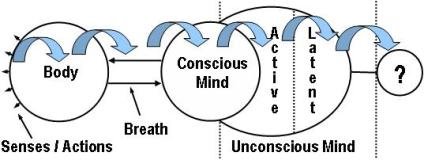
Yoga or "Union" is attained by first training, balancing, and purifying each of the aspects of our being individually, and then systematically receding attention inward through those levels, expanding so as to experience the state of Union, Yoga, Samadhi, or Turiya.
Showing posts with label yoga. Show all posts

Saturday, December 29, 2012

Review of The Science of Yoga


Review of The Science of Yoga,
a book by William J. Broad
Review by Swami Jnaneshvara Bharati

There is a widespread misunderstanding of the nature of yoga that is well exemplified by William J. Broad in his book “The Science of Yoga”. Broad says in the Introduction that the book is about “postural yoga”, but he never again uses that term. Instead, he subsequently uses the single word “yoga”, implying that yoga and postures (postural yoga) are one and the same, which is the common cultural myth of our times. The degree to which he had done this was not immediately apparent to me; it took several readings to see the problem clearly. 

Broad says that we are now in a period of yoga 2.0 and predicts that in the next two to three hundred years we will see the coming of yoga 3.0 and yoga 4.0. However, he says that his baseline period--yoga 1.0--is the medieval ages, completely ignoring the previous thousands of years of yoga history, which includes the yoga of the Vedas, Upanishads, Bhagavad Gita, and Yoga Sutras.

Broad says that the yoga of Patanjali (the Yoga Sutra) is “old yoga”, apparently in contrast to his views of “new yoga”. However, this new yoga bears no resemblance to the old yoga (using his term for clarity, not meaning that I agree with him). Broad also uses the phrase “modern yoga” a few times. If Broad’s categories align with today’s common view of yoga, then we can see that the current yoga is “not yoga” compared to the yoga of the ancient sages. There is almost nothing to be found of modern yoga, yoga 2.0, or not yoga in any of these ancient descriptions of yoga that would be part of old yoga. 

We can get a clearer understanding of Broad’s book by mentally inserting the term “postural yoga” wherever he uses only the single word “yoga”. We can also mentally insert “not yoga” or “modern yoga” wherever he used only the single word “yoga”. These three exercises gives a very different feel to the book, making clear Broad’s disregard, if not disdain for the traditional meaning of yoga. In other words, Broad sees yoga only as a physical process dealing with fitness and health/medical treatments, and he writes from that perspective alone.

Once we see that Broad is talking only about the modern devolutions of yoga, it is easy to assess the quality and usefulness of his writing from within that limited scope. He has written an extremely clear and useful book about postural yoga or modern yoga or not yoga, as well as clearly summarizing the risks and benefits of those categories. However, although it is obviously not his intent, he has also done a great job of outlining the devolution of yoga in the past hundred years or so. 

I encountered only one place where Broad uses the term “traditional yoga”, a term I and others have used to contrast the yoga of the sages from modern yoga. However, he uses the term traditional yoga not to refer to the yoga of the sages, but to postural hatha yoga before it was altered/hijacked by the innovators such as Krishnamacharya, Jois, and Iyengar. 

I highly recommend this book. It gives great summaries of the potential dangers of modern postural yoga (not yoga), as well as physical fitness and health benefits, and if you read closely, also maps out the way in which yoga has been distorted in recent years. You may also notice that Broad offers no evidence or research whatsoever showing any danger in practicing the introspective methods of yoga as explained by the practitioners and teachers of old yoga (known simply as yoga). Apparently the dangers he presents only apply to not yoga, the modern distortions of yoga. 

There was not a single example of anybody experiencing any health problems from sitting quietly doing the introspective practices of meditation and contemplation, which are characteristic of yoga done for its original purpose, Self-realization. It would be interesting to see research on the risks and rewards of these meditation and contemplation practices of old yoga, but this is not the subject of Broad’s book. That may be very difficult research since so few people are practicing or interested in this.

Tuesday, January 24, 2012

Real Yoga Will Not Wreck Your Body

Real Yoga Will Not Wreck Your Body
Swami Jnaneshvara Bharati
January 24, 2012

The New York Times published an article on January 5, 2012 entitled "How Yoga Can Wreck Your Body". This article has since spread like wildfire throughout internet. I am writing comments in the 16-page attached article to strongly refute much, if not most of what William J. Broad (the author) has said.

~Swami Jnaneshvara Bharati

Wednesday, February 18, 2009

VIDEO (8:12 min): The Truth about the 10 Reasons for Yoga

NEW VIDEO (8:12 Minutes)

THE TRUTH ABOUT THE 10 REASONS FOR YOGA
By Swami Jnaneshvara Bharati
http://www.swamij.com/

VIDEO is at YouTube:
http://www.youtube.com/watch?v=mwcKxsYHm3c

Yoga Day USA lists "Top 10 Reasons to Try Yoga for Life"
on their website www.YogaDayUSA.org

Unfortunately, most of their
reasons have little to do with
authentic, traditional Yoga.

REASON #1. YOGA FOR … STRESS RELIEF:
Yoga reduces the physical effects of stress on
the body. By encouraging relaxation, yoga helps
to lower the levels of the stress hormone cortisol.
Related benefits include lowering blood pressure
and heart rate, improving digestion and boosting
the immune system as well as easing symptoms
of conditions such as anxiety, depression, fatigue,
asthma and insomnia.

THE TRUTH ABOUT YOGA:
Most people in the West, and also many in India,
confuse Yoga with Hatha Yoga, the system of
bodily postures. But Yoga is primarily a spiritual
discipline.
(Paramahansa Yogananda)

REASON #2. YOGA FOR … PAIN RELIEF:
Yoga can ease pain. Studies have demonstrated that
practicing yoga asanas (postures), meditation or a
combination of the two, reduced pain for people
with conditions such as cancer, multiple sclerosis,
auto-immune diseases and hypertension as well as
arthritis, back and neck pain and other chronic
conditions. Some practitioners report that even
emotional pain can be eased through the practice
of yoga.

THE TRUTH ABOUT YOGA:
Yoga has become the health and fitness system
of choice. This is odd because it is the mind -
not the body - that is the main target of all genuine
Yoga practices .... To regard Yoga primarily as a
set of practices for increasing strength and
flexibility while calming the nervous system is
to mistake the husk for the kernel.
(Pandit Rajmani Tigunait)

REASON #3. YOGA FOR … BETTER BREATHING:
Yoga teaches people to take slower, deeper breaths.
This helps to improve lung function, trigger the
body's relaxation response and increase the amount
of oxygen available to the body.

THE TRUTH ABOUT YOGA:
Like many arts and sciences that are profound,
beautiful, and powerful, yoga has suffered from
the spiritual poverty of the modern world--it has
been trivialized, watered down, or reduced to
cliches. The deep and eternal essence of yoga
has been misrepresented and packaged for
personal profit by clever people.
(Bhole Prabhu)

REASON #4. YOGA FOR … FLEXIBILITY:
Yoga helps to improve flexibility and mobility,
increasing range of movement and reducing aches
and pains. Many people can't touch their toes during
their first yoga class. Gradually they begin to use the
correct muscles. Over time, the ligaments, tendons
and muscles lengthen, increasing elasticity, making
more poses possible. Yoga also helps to improve body
alignment resulting in better posture and helping to
relieve back, neck, joint and muscle problems.

THE TRUTH ABOUT YOGA:
In ancient times hatha Yoga was practiced for
many years as a preparation for higher states of
consciousness. Now however, the real purpose
of this great science is being altogether forgotten .
The hatha Yoga practices which were designed
by the rishis and sages of old, for the evolution
of mankind, are now being understood and
utilized in a very limited sense.
(Swami Satyananda Saraswati)

REASON #5. YOGA FOR … INCREASED STRENGTH:
Yoga asanas (postures) use every muscle in the
body, helping to increase strength literally from
head to toe. And, while these postures strengthen
the body, they also provide an additional benefit
of helping to relieve muscular tension.

THE TRUTH ABOUT YOGA:
Yoga is not mere acrobatics . Some people suppose
that Yoga is primarily concerned with the
manipulation of the body into various queer
positions, standing on the head, for instance, or
twisting about the spine, or assuming any of the
numerous odd poses which are demonstrated in
the text-books on Yoga. These techniques are
correctly employed in one distinct type of Yoga
practice, but they do not form an integral part of
the most essential type. Physical posture serve
at best as an auxiliary, or a minor form of Yoga.
(Swami Chidananda Saraswati)

REASON #6. YOGA FOR …
WEIGHT MANAGEMENT:
Yoga (even less vigorous styles) can aid weight
control efforts by reducing the cortisol levels
as well as by burning excess calories and
reducing stress. Yoga also encourages healthy
eating habits and provides a heightened sense of
well being and self esteem.

THE TRUTH ABOUT YOGA:
Many false and incomplete teachings have been
propagated in its name, it has been subject to
commercial exploitation, and one small aspect
of Yoga is often taken to be all of Yoga. For
instance, many people in the West think it is a
physical and beauty cult, while others think it
is a religion. All of this has obscured the real
meaning of Yoga.
(Swami Rama)

REASON #7. YOGA FOR …
IMPROVED CIRCULATION:
Yoga helps to improve circulation and, as a result
of various poses, more efficiently moves
oxygenated blood to the body's cells.

THE TRUTH ABOUT YOGA:
Through the discipline of Yoga, both actions and
intelligence go beyond these qualities [gunas] and
the seer comes to experience his own soul with
crystal clarity, free from the relative attributes of
nature and actions. This state of purity is samadhi.
Yoga is thus both the means and the goal. Yoga
is samadhi and samadhi is Yoga.
(B. K. S. Iyengar)

REASON #8. YOGA FOR …
CARDIOVASCULAR CONDITIONING:
Even gentle yoga practice can provide cardio-vascular
benefits by lowering resting heart rate, increasing
endurance and improving oxygen uptake during
exercise.

THE TRUTH ABOUT YOGA:
The main objective of hatha Yoga is to create an
absolute balance of the interacting activities and
processes of the physical body, mind and energy.
When this balance is created, the impulses
generated give a call of awakening to the central
force (sushumna nadi) which is responsible for
the evolution of human consciousness. If hatha
Yoga is not used for this purpose, its true
objective is lost.
(Swami Satyananda Saraswati)

REASON #9. YOGA FOR …
FOCUS ON THE PRESENT:
Yoga helps us to focus on the present, to become
more aware and to help create mind body health.
It opens the way to improved concentration,
coordination, reaction time and memory.

THE TRUTH ABOUT YOGA:
The goal of Yoga is Yoga itself, union itself, of the
little self and the True Self, a process of awakening
to the preexisting union that is called Yoga.
Yoga has to do with the realization through direct
experience of the preexisting union between Atman
and Brahman, Jivatman and Paramatman, and
Shiva and Shakti, or the realization of Purusha
standing alone as separate from Prakriti.
(Swami Jnaneshvara Bharati)

REASON #10. YOGA FOR … INNER PEACE:
The meditative aspects of yoga help many to reach
a deeper, more spiritual and more satisfying place
in their lives. Many who begin to practice for
other reasons have reported this to be a key reason
that yoga has become an essential part of their
daily lives.
(This finally touches on the real reasons for Yoga
by mentioning that it is for "spiritual" reasons.)

THE TRUTH ABOUT YOGA:
You use the body as a medium to bring the mind
back to the brain. Perfect marriage between body
and mind. Then, you can reach and knock the
door to the spirit....
Yoga is free. It belongs to the earth. It's a god.
(Bikram Choudhury)

AUDIO (34 min): Developing Determination for Enlightenment

DEVELOPING DETERMINATION FOR ENLIGHTENMENT
Swami Jnaneshvara Bharati

AUDIO RECORDING (PODCAST)
(34:20 minutes)
http://www.swamij.com/podcast/determination-090201.mp3

From a presentation at the Center for Nondualism on February 1, 2009.

http://centerfornondualism.org/

http://www.swamij.com/

Wednesday, December 17, 2008

New Website on Teachings of Swami Rama

Someone has created a new website on the teachings of Swami Rama. It has over 50 separate articles by Swami Rama on very practical matters of yogic and spiritual life.

LINK:
https://sites.google.com/site/swamiramateachings/

DESCRIPTION (from the site)

One of the greatest gifts of Swami Rama to humanity was bringing the depths of the wisdom of the ancient sages of Yoga meditation, Vedanta, and Tantra to the people in highly accessible ways. His style of writing is extremely clear and practical, speaking from the highest perspective of a Himalayan master. The writings on this website are a small sample of that wisdom.

Although Swami Rama was most known for guiding people on the path to the highest spiritual realizations, his finest worldly accomplishment was founding the Himalayan Institute Hospital Trust near Haridwar, Rishikesh, and Dehradun, India. This includes a 750-bed hospital, a 400-student medical college, a 300-student nursing school, the major cancer center in the region, and a rural development program serving over 1000 villages in the region, including the high Himalayas areas of the sages near the source of the River Ganges. HIHT is also the home of Swami Rama Center, which is dedicated to preserving and promoting the teachings of Swami Rama. Swami Rama also founded Sadhana Mandir Ashram, which is located nearby in Rishikesh.
http://hihtindia.org/
http://sadhanamandir.org/

Swami Rama was born in the Himalayas, lived a life of service to humanity, and left the body on November 13, 1996 at his residence on the grounds of the Himalayan Institute Hospital Trust.

QUOTES FROM ARTICLES (from the home page)

The following quotes of Swami Rama are excerpts from the articles linked at the left.

You are the Architect: When a human being learns to seek religion not in gods, but in his own potentials, then he will know that he is great and that within his greatness lies his happiness. When he rapidly unfolds the chapters of life's manuscript, of which he himself is the author, he begins to realize who he is.You are the architect of your life. You build your own philosophy and construct your own attitudes. Without right attitudes, the entire architecture remains shaky. Once you realize this fact, you will look within.(more)

Enlightenment and Freedom: People continue to build shrines, chapels, churches, and temples. You don't have to do this, just realize that you are a living shrine. The day you have attained the knowledge that the Lord lives within you, you will be in samadhi. All questions will be answered, all problems will be resolved. (more)

Knowing Yourself: The aim of life is Self-realization. The saying, "Know thyself," was written on the temple of the oracle at Delphi in ancient Greece. This is where East and West meet. Both East and West agree on this goal, though they might hold different ways of attaining it. The one important part of life is ignored by the educational systems at home, in society, and in the colleges and universities: "Know thyself." You need to understand yourself on all levels. You don't need much external information; you already have true knowledge within. You need to learn how to apply the knowledge that you have. (more)

Arise, Attain, and Serve: Today's society is waiting for selfless, spiritually enlightened, well-balanced leaders to guide them in how to live happily here and hereafter. Such leaders or reformers will not come from outside our society. They have to be born, raised, and trained right in our own society. We are the ones to become our own guides, our own leaders, and we are the ones to enlighten our own lives. Get up, my friends, arise: attain knowledge, and dedicate your life to the service of your fellow beings. (more)

Sushumna: According to the yogic scriptures, there are 72,000 nadis, or energy channels. Among them, ida, pingala, and sushumna are the most important. As long as the mind is outward, only ida and pingala remain active. But when the mind is calm and tranquil, sushumna, the central channel, is awakened. The joy derived from the mind traveling through the sushumna channel is unique; it cannot be compared with any sensory pleasure. Because of that inner joy, the mind loses its taste for worldly pleasures. Sushumna application is the most important factor in spiritual practice. The moment sushumna is awakened, the mind longs to enter the inner world. When the flow of ida and pingala is di¬rected toward sushumna, and distractions are thereby removed, meditation flows by itself. (more)

Keys to Successful Living: Everyone wants to be successful in life, but where are the keys to success? Do we have to go out and search for those keys, or do we have those potentials already within ourselves? When we begin to examine life, we can see that it is divided into two aspects -- life within and life without; internal life and external life -- and we can see that these aspects are of equal importance. Even if we have renounced the world, gone far away from civilization, and live in the wilderness doing nothing but meditation, we cannot ignore external life. We still have to see that we eat, do our ablutions, and perform our practices on time. So life in the external world is as important as life in the internal world. Even one who has renounced the world has to understand the word "relationship" properly, because life itself is actually relationship. (more)

Internal Dialogue: Developing internal dialogue is a very important step, but one that few students understand. To succeed in meditation you have to develop this important step. You do not begin with meditation itself. First you learn to set a regular meditation time, and then to have a dialogue with yourself. In this process you are coming in contact with your inner, internal states. You are learning about the subtle aspects of your mind, your own conscience, and at the same time you are training yourself. (more)

Mantra and Silence: Imagine that you are standing on the bank of a river and you hear the current as it flows. If you follow the river upstream, you will come to its origin. There, you will find that there is no sound. In the same way, a mantra leads the mind to the silence within. That state is called "soundless sound." The seven sounds, or mantras, of the chakras, if magnified, create a form. Each mantra will make a different form. But magnifying sound in the external world is not going to help you. You have to go to the source within, from which that sound comes. This form gives you a knowledge of the sound, and the sound gives you a knowledge of the silence from which all sounds come. (more)

Guru and Divine Grace: Guru is not the goal. Anyone who establishes himself as a guru to be worshipped, is not a guru. Christ, Buddha, and other great persons did not set up any such example. Guru is like a boat for crossing the river. It is important to have a good boat and it is very dangerous to have a boat that is leaking. The boat brings you across the river. When the river is crossed the boat is no longer necessary. You don't hang onto the boat after completing the journey, and you certainly don't worship the boat. (more)

Self Transformation: For a genuine and everlasting transformation, one must practice a systematic method of self-discipline and self-training. Mere philosophy and intellectual knowledge cannot stand in time of need, if one does not know how to use the essentials of that philosophy in one's daily life. Applying theoretical knowledge and living with it in daily life is called practice. Practice requires discipline. Discipline should not be rigidly imposed, but students should learn to commit themselves and accept discipline as essential for self-growth. Imposing rigidity and following it is not helpful at all. (more)

NEW VIDEO (9 min): Trataka and Soham Mantra: Yoga and Tantra Meditation

NEW VIDEO (9:00 Minutes)

TRATAKA GAZING WITH SOHAM MANTRA:
YOGA AND TANTRA MEDITATION
By Swami Jnaneshvara Bharati
http://www.swamij.com/

VIDEO is at YouTube:
http://www.youtube.com/watch?v=VBASQ314m7c

Trataka is gazing, and is a traditional meditation practice of Yoga
and Tantra.

SoHum (or SoHam) is a Universal Mantra, as it relates to the breath,
and everybody breaths.

SoHum is a Sanskrit word that means
"I am that," or "I am that I am."

Inhale with the sound "So,"
And Exhale with the sound "Hum."
Allow the sounds to silently repeat in your mind,
without speaking them aloud.

There are a total of 40 SoHum and breath repetitions
The speed of one repetition is 9 seconds per breath,
which is 6 2/3 breaths per minute.
This rate is ideal for relaxing
the autonomic nervous system, and also
preparing for deep meditation.

Breathe with your diaphragm, while gazing at the center, silently
remembering "So" with inhalation and "Hum" with exhalation.

Debate Argumants: Is Yoga a Religion?

DEBATE ARGUMENTS: "IS YOGA A RELIGION?"

Following is a link to a website called Opposing Views on the question
"Is Yoga a Religion?" Rabbi Sigal Brier says "Yes" and Swami
Jnaneshvara Bharati says "No." Read the arguments for yourself. If you
wish, you can even cast your vote for "Yes" or "No."

http://www.opposingviews.com/questions/is-yoga-a-religion

Tuesday, September 16, 2008

NEW VIDEO: (3:56 min) The “Seer” Beyond the Mind: Meditation from Yoga Sutras

NEW VIDEO (3:56 Minutes)

THE "SEER" BEYOND THE MIND:
MEDITATION FROM THE YOGA SUTRAS
By Swami Jnaneshvara Bharati

VIDEO is at YouTube:
http://www.youtube.com/watch?v=4CRQFsLfYOk

Sanskrit drasthri is the “seer”
Who am I?
What am I?
Set aside what I am not...
What I truly am will come shining through.
Yogash chitta vrittih nirodhah (Yoga Sutra 1.2)
Yoga is “nirodha” of the thoughts in the mind field.
Nirodha is coordination, control, regulation, integration, mastery, letting go, setting aside...
Tada drashtuh svarupe’vasthanam (Yoga Sutra 1.3)
Then the “seer” rests in its own true nature.
The “seer” is the “witness.”
The “seer” is awareness itself.
“Drashtuh” is “of the seer.”
Drashtuh is from “drish” which is “to see.”
The “seer” is the self-existent reality of pure consciousness itself.
It was never born and never dies.
It is not subject to pain, decay, or decomposition.
The “seer” lives in the world.

Music is by Chopin
Nocturne in C# minor

Discussion on Yoga Sutras 1.2-1.3:
http://www.swamij.com/yoga-sutras-10104.htm

Extensive writings on the whole of Yoga Sutras:
http://www.swamij.com/yoga-sutras.htm

Sunday, March 02, 2008

VIDEO (2 min): What Yoga has Become in America

NEW VIDEO (2:00 Minutes)

What Yoga has Become in America
By Swami Jnaneshvara Bharati

VIDEO at YouTube:
http://www.youtube.com/watch?v=An4LwizAVFo

For more information about what Yoga has become in America, please see:
http://www.swamij.com/traditional-yoga.htm

Saturday, September 29, 2007

13 Speakers: Swami Rama Yoga Meditation Intensive, India, 10/29/07 - 11/16/07

Following is an announcement about the Swami Rama Intensive in India Oct 29 - Nov 16. This will truly be an exciting and insightful time for sincere practitioners of Yoga Meditation, Vedanta and Tantra in the context of the teachings and tradition of Swami Rama. I personally very much look forward to participating, to helping with the presentations, and to hearing the perspecives of the other 12 speakers (biodata below). This is a rare opportunity for those who attend.

In loving service,

Swami Jnaneshvara

ANNOUNCEMENT

Sadhana Mandir Ashram (Swami Rama’s Ashram) of Rishikesh, India is happy to announce the SWAMI RAMA INTENSIVE program, October 29 – November 16, 2007 at the Himalayan Institute Hospital campus and Swami Rama Center, between Rishikesh and Dehradun, India. Monday through Friday programs will be at the hospital campus and weekend retreats will be at the ashram on the Ganges in Rishikesh.

The SWAMI RAMA INTENSIVE will be a flexible program adapting to the wishes and needs of the participants. However, each daily program will include classes drawing directly on a specific chapter from one of the books by Swami Rama. These presentations will be give by 13
different speakers, who are listed below. There will also be group meditations and self-awareness practices in alignment with the practices taught by Swami Rama.

FOR MORE INFO, RESERVATIONS & QUESTIONS:
http://www.sadhanamandir.org/SRI.htm

BIODATA OF THE 13 PRESENTERS:

Dr Achala M. Singhal, MD, DM, FACC, is a Professor & Head of Cardiology Department at Himalayan Institute of Medical Sciences. Personally trained by Sri Swami Rama in holistic approaches to medicine, Dr. Achala has conducted research on the effects of
meditation and breath control on hypertension and heart disease. Holistic approaches with cardiac patients have helped avoid invasive procedures in many cases, along with complete healing.

Dr. Anil Singhal is Professor of Neurology at HIHT. He received his M.D. in Medicine at AIIMS and did his residency in Neurology in USA. He is Head of the Departments of Holistic Medicine and Neurosciences. He worked closely with Swamiji from the very inception of HIHT.

Dr. M. Ganasan, MBBS, a disciple of Swami Rama since 1990, Dr. Ganasan had a flourishing private medical practice in Malaysia. Currently Director of the Combined Therapy Program at HIHT, Dr. Ganasan focuses on Yoga Therapy based on Patanjali’s Yoga Sutras and Swami Rama’s teachings. This highly individualized program takes the participant through physical postures, breathing exercises, cleansing practices, mind/ energy/body integration, leading to Self Awareness and ultimately to living in the universe itself.

Dandi Swami Jnaneshvara Bharati, MA, a disciple of Swami Rama, provides spiritual counseling and teaches practical aspects of Meditation, Yoga, Vedanta, and internal Tantra. Swami J is widely known for his passionate dedication to the teachings of Swami Rama,
which he expounds in a simple, efficient, and easy-to-understand manner.

Dr. John Clarke, M.D. is former Chairman of the Himalayan Institute of the USA, Dr. Clarke received his M.D. degree from Harvard University in Family Practice, Internal Medicine and Cardiology. He is also an Emergency Room physician and resides in Boston, Massachusetts, USA.

Dr. Kathleen McKeehan is a Nursing Advisor at the Himalayan Institute Hospital Trust. She received her Ph.D in Nursing from Case Western Reserve University, USA. She is a certified Hatha Yoga teacher and worked with Swamiji in USA before coming to India in 1992.

Ms. B. Maithili, a disciple of Swami Rama, is serving the Himalayan Institute Hospital Trust in the capacity of Director of Rural Development Institute.

Dr. Prakash Keshaviah is Director of Nephrology and an Honorary Professor of Physiology at HIHT. He received Post-Graduate Degrees in Biomedical Engineering and Physiology from the University of Minnesota, USA. His training with Swamiji dates back to the late 1960s.

Dr. Ravindra Kumar Mamgain, experienced in Ayurveda for over 20 years, is an Associate Professor of Ayurvedic Medicine, Himalayan Institute of Medical Sciences, and consultant physician at the Department of Ayurveda,

Dr. Sunil Saini M.B.B.S., M.S. ( Surgery), Fellow UICC, Senior Consultant Surgical Oncology , Professor of Surgery. Dedicated to the service of cancer patients, Dr. Saini was inspired and trained by Swami Rama to focus on holistic approaches, quality of life issues and stress management in cancer control and research.

Mr. Vijay Dhasmana, member Presidential Body, is respected for his dynamic leadership and management abilities. Having recently translated several of Swami Rama’s books from English into Hindi, Vijay is very conversant with Swamiji’s teachings.

Dr. Vijendra Chauhan is a Professor and an eminent Surgeon of Orthopaedics in HIHT. He is also a member of the Presidential Body. He received his MS in Orthopaedics from Mahatma Gandhi Institute of Medical Sciences. Hehas been associated with Swamiji since 1994.

Dr. Vishnudas K. is an Ayurvedic physician with over 15 years of experience in Ayurveda. He currently runs the Ashtavaidhya Parampara Ayurvedic center in Rishikesh, and has an Ayurvedic clinic at the Himalayan Institute Hospital Rishikesh Extension branch.

http://swamij.com/

Monday, September 03, 2007

Mandukya Upanishad on Om Mantra: Yoga Meditation (VIDEO 9:30)

Mandukya Upanishad on Om Mantra: Yoga Meditation (VIDEO 9:30)

This video is on the Om Mantra as outlined in the Mandukya Upanishad. The pinnacle of the wisdom of the ancient sages is contained in these terse twelve verses, which outline the philosophy and practices of the Om mantra (written as either AUM or OM). The three stages plus the fourth of Om mantra are central to Yoga Meditation, Advaita Vedanta, and Samaya Sri Vidya Tantra.

VIDEO (9:30 minutes):

Click here for VIDEO at YouTube:
http://youtube.com/watch?v=fNruveUaeRg

Click here for VIDEO at MySpace:
http://myspacetv.com/index.cfm?fuseaction=vids.individual&videoid=17293431

http://www.swamij.com/

Monday, August 20, 2007

Can a Christian Practice Yoga? (VIDEO: 5:45 minutes)

VIDEO (5:45 minutes):

CAN A CHRISTIAN PRACTICE YOGA?
Swami Jnaneshvara Bharati

Can a Christian Practice Yoga? It depends on the individual Christian and the extent of his or her deep longing for union or Yoga that may lie deeply in the mind and heart. If one practices physical posture without the higher goals, it can hardly be called Yoga. It may be physical fitness, but it is no more Yoga than drinking wine and eating bread alone are Christianity.

Click here for VIDEO at YouTube:
http://www.youtube.com/watch?v=xQXAYioSQ9I

Click here for VIDEO at MySpace:
http://vids.myspace.com/index.cfm?fuseaction=vids.individual&videoid=16255136

http://www.swamij.com/

Saturday, August 18, 2007

Spirituality and When it Dawns - Swami Rama

http://www.swamij.com/swami-rama-spirituality-dawns.htm
From The Essence of Spiritual Life
By Swami Rama
ISBN 8188157015
Reprinted with permission of the Publisher
Copyright Himalayan Institute Hospital Trust
http://hihtindia.org/
Swami Rama Foundation
http://www.swamiramafoundation.us/

SPIRITUALITY AND WHEN IT DAWNS
Swami Rama

It is not necessary to retire to a monastery to lead a spiritual life. We cannot escape from our inherent longings or postpone our utmost needs. In addition to the primitive urges for food, sex, sleep, and self-preservation, there is a higher urge to merge with God. We cannot be at peace unless that inherent divine urge is fulfilled.

We all want to experience the all-pervading, omnipresent God from which the entire universe, as well as each individual, has evolved. Direct experience of the truth that each of us originates from God, and ultimately will return to God, makes us secure, happy, and strong.

Today millions of educated men and women are suffering from a lack of purpose. Lacking also in self-confidence, young girls and boys have become victims of dissatisfaction and frustration. Along with a worldly education, we must provide some spiritual education.

Human beings have done research on three levels so far on mind, energy, and matter. Yet we have not found out a way to live in peace, to attain happiness that is free from all problems, pains, and miseries. We study this “ism,” and that “ism.” We go to this church and that temple. We seek advice from this swami and that other yogi. Yet, we have not found the way.

The whole confusion lies in the fact that we do not understand ourselves, and yet we introduce ourselves to others. We are strangers to ourselves yet we get married, have children, have homes, and claim to love others.

That training that helps us to attain a state of happiness free from pains and miseries, is missing from our daily life. Nobody teaches us how to look within, how to find within, how to verify within.

We are taught to know and see things in the external world, but this inner training and knowledge is missing. When we graduate with flying colors from colleges and universities, we find that we are still unsatisfied. The big questions about life still remain questions:

Who am I? From where have I come? What is the purpose of life? Where will I go from here?

Modern education helps us to understand and to be successful in the external world, the world of means. It doesn’t help us to know ourselves.

To know yourself, you don’t have to go anywhere. If you want to know yourself, you have to follow the path from the grossest to the subtle, then to the subtler, and finally, to the subtlest aspects of your life. You have to search for yourself, because religions do not fulfill this need.

I am not telling you not to follow your religion, or not to believe and trust in your religion. Often religions do not answer certain vital questions of life. Religions tell you what to do and what not to do, but religions do not tell you how to be.

No matter how many temples and churches we build, nothing is going to happen unless we accept one principle—that the greatest of all churches and temples is the living human being.

The scriptures say:

"The greatest of shrines is the human body. Look within and find within. There His Majesty dwells in the inner recesses, in the inner chamber of your being."

The day you come to know this, you will be happy. To believe in God is not a bad thing. It is a very good thing, because at least you have faith; but you should not forget that God is within you.

As a part of our educational training, we must define spirituality in its most precise and universal terms. Spirituality means that which helps us discipline our thoughts, speech, and actions, that which leads us toward the center of consciousness, and thereby unfolds our inner potentials.

Education based on such spiritual guidelines will help humanity to become self-reliant, confident, and active in the external world. At the same time, it will enable humanity to broaden its world view, and to become inward to search for the perennial Truth. Only a spiritually based education can bring harmonious balance to our external and inner lives.

Knowledge of theories that prove the existence of God is not as important as learning to discipline oneself, so that God can be experienced directly. Children should be taught how to sit quietly and make their minds one-pointed. Through their calm and one-pointed minds, children can obtain a glimpse of true peace and happiness. We need not force them to believe that there is a God; however, we should provide them with the opportunity to unfold their inner potentials, gain confidence, and become inspired to search for God, according to their own inner tendencies and backgrounds. Children need to cultivate divine virtues within themselves.

That which is purely physical has its limits, like the shell of an egg. Spirituality has infinite horizons and limitless freedom. It is full of knowledge and perennial light, life, and delight. When one is completely detached, one realizes oneself in a wider and deeper relationship with the Universal Being.

When ego becomes aware of something that is higher than ego—the individual spirit, or soul—then spirituality dawns.

Spirituality dawns when individuality vanishes.

http://www.swamij.com/

Wednesday, August 15, 2007

VIDEO Tribute to Swami Rama - Master of Yoga, Vedanta, and Tantra

This video is a tribute to Swami Rama of the Himalayas, one of the greatest teachers of Yoga, Vedanta, and Tantra of the twentieth century. Swami Rama was a master of the Himalayan tradition who taught throughout the world and founded the Himalayan Institute Hospital Trust and Swami Rama University near Dehradun, India, as well as Sadhana Mandir Ashram in Rishikesh, India.

VIDEO (3:53 minutes):

Click here for VIDEO at YouTube:
http://www.youtube.com/watch?v=a8UcrJ19VCU

Click here for VIDEO at MySpace:
http://myspacetv.com/index.cfm?fuseaction=vids.individual&videoid=15863404

http://www.swamij.com/

Sunday, August 12, 2007

Does Yogi Bear have anything to do with Yoga? (VIDEO; 50 seconds)

Does Yogi Bear have anything to do with Yoga?

Have you ever seen the cartoon character Yogi Bear? Did you ever wonder how he got his name? Does it have anything to do with Yoga? Here is the answer!

VIDEO answer to the question (50 seconds):

Click here for VIDEO at YouTube:
http://www.youtube.com/watch?v=_0bAQekvsmg

Click here for VIDEO at MySpace:
http://vids.myspace.com/index.cfm?fuseaction=vids.individual&VideoID=15603522

http://www.swamij.com/

Friday, August 10, 2007

Wisdom to live by in Yoga Meditation, Vedanta, and Tantra

Wisdom to live by in Yoga Meditation, Vedanta, and Tantra
Click here for VIDEO (1 minute, 18 seconds):
http://www.youtube.com/watch?v=f77QGujFcKg

WISDOM TO LIVE BY IN YOGA MEDITATION, VEDANTA, AND TANTRA
Swami Jnaneshvara

• There is only one highest reality and many teachers.
• All humans and life arise from the same one source.
• All countries, religions and institutions arise from that.
• There are many books of wisdom from many ages.
• Thinking there is only one way comes from ignorance.
• Coercive conversion is violence against other peoples.
• The goal of life is found within, not in institutions.
• Wisdom, joy and freedom come from inner stillness.
• Love all, as we are all waves of the one ocean.

Love all and exclude none.

Click here for VIDEO (1 minute, 18 seconds):
http://www.youtube.com/watch?v=f77QGujFcKg

http://www.swamij.com/

Thursday, August 09, 2007

Nondualism (Advaita) in Vedanta and Yoga Meditation

Nondualism (Advaita) in Vedanta and Yoga Meditation

VIDEO (3 minutes):

http://youtube.com/watch?v=Cn5DLp8y3tg

Nondualism is central to Advaita Vedanta and Yoga Meditation. Seek to know that by which knowing, The nature of all things is known, Seek to love that by which loving, That love beyond all forms is known. That by which knowing, loving, holding Comes Absolute Joy, The One Joy that is unbounded, unconditioned, Limitless.

http://www.swamij.com/

Tuesday, August 07, 2007

Brief Hindu Timeline for Practitioners of Yoga Meditation

Brief Hindu Timeline for Practitioners of Yoga Meditation

CLICK HERE FOR VIDEO:
http://youtube.com/watch?v=1a6vMAGTUhI
(10 minutes)

The dates for the Brief Hindu Timeline are drawn from a significantly more extensive timeline assembled by Hinduism Today in 1994. It should be self evident that the choice of items on the timelines and the dates themselves may not align with the opinions of all people. This video is presented as general information, not as a scholarly stance. Dates preceded by "ca" are approximate. The notation "bce" means "before common era" in the year zero of the Western or Gregorian calendar. The notation "ce" means "common era" and is after the year zero.

http://www.swamij.com/

Sunday, August 05, 2007

Advanced Yoga Nidra

FROM:
http://www.swamij.com/yoga-nidra.htm

ADVANCED YOGA NIDRA

The form of Yoga Nidra being described in this article can be called Advanced Yoga Nidra. In recent years Yoga Nidra has been distorted in ways similar to Yoga itself. Unfortunately, almost any guided practice that brings a modicum of relaxation is now called Yoga Nidra. Therefore, it is now virtually essential that we use another term, such as Authentic Yoga Nidra, Traditional Yoga Nidra, or Advanced Yoga Nidra. I've opted for the term Advanced Yoga Nidra in this article.

CLICK HERE FOR THE
COMPLETE ARTICLE
ON YOGA NIDRA
http://www.swamij.com/yoga-nidra.htm

Saturday, April 21, 2007

Practice Means to Awaken the Conscience

http://www.swamij.com/swami-rama-conscience.htm
From Samadhi: The Highest State of Wisdom
Volume One of Yoga the Sacred Science
(Lectures on the Yoga Sutras)
By Swami Rama
ISBN 8188157015
Reprinted with permission of the Publisher
Copyright Himalayan Institute Hospital Trust
http://hihtindia.org/
Swami Rama Foundation
http://www.swamiramafoundation.us/

PRACTICE MEANS TO AWAKEN THE CONSCIENCE
Swami Rama

You will have to practice for a long time. "Abhyasa-vairagyabhyam tan nirodhah." Practice means repetition of the same thing again and again and again to form a strong habit. Habits are motivation in life. If you do not have determination to attain that which should be attained, if you are not constantly aware of the Reality, how can you practice? You will feel lazy and you will not be able to sit in meditation.

There is one alarm in your system, something coming from within that guides all the time. There is one teacher within that you call your conscience. Whenever you want to do something that should not be done, immediately from inside something says, "Don't do that." It silently says "no." It is not a part of mind. Rather it is your conscience that is telling your mind, whispering to your mind. You have been avoiding that. Habit patterns are so strong that the voice of silence, the voice of the conscience, is not heard. You do not need anyone from outside to tell you what not to do. You know that you should not lie; yet you lie. Once mind listens to these secret whispers, then you are introduced to the real teacher within, your own conscience. All teachings are meant for that day when you start listening to your conscience. It does not mean that you should not listen to the external teacher who is teaching you. Your teacher is trying to make you aware that there is something within you, a teacher within, who is a great friend. No matter who you are, your conscience is always there. If you learn to listen to the voice of the conscience, you can transform your whole personality. That conscience knows everything. No book can teach you; no teacher can teach you. Conscience knows and knows that it knows. Even when you go to a teacher to ask something, you draw your own conclusions and follow your conscience.

But you do not always listen to the teachings of your conscience. In fact, you are constantly killing your conscience. According to the great books of wisdom, the greatest sin of all is to kill your conscience. After some time your conscience stops talking to you because you do not listen to it. You have ignored your conscience so much that it has become silent. It continues to witness your actions but does not say anything. Learn to listen to your conscience. Most of the time you are confused by your mind. Sometimes your mind plays tricks on you and pretends to be your conscience. Mind says, "I can steal some of his money. Nobody is watching me. Why does he need to have millions of dollars? If I steal only one hundred thousand dollars, so what?"

Mind is different from conscience. Your conscience always wants to help you to improve yourself and unfold your inner being. Mind always tries to persuade you not to practice. You know that it is not good for you to avoid your practice, and yet the mind says, "Come on. Postpone it until tomorrow." Postponement is the nature of the mind. Some students do their practice for some time and then they leave it. After some time, they start doing it again. Then they say, "Okay. Let us vacation for some time, honey. Let us not do any practice." Again they start practicing. I call those who postpone enlightenment indefinitely fourth-class students.

Mind always leads you toward your habits, your senses, and sense objects. Perhaps you like to eat fish, but the doctor has said not to take it. The doctor's advice has been heard by your conscience. Your mind does not want to hear it and does not care for doctors. "There are many doctors. Why should I listen to them? Let me have some fish today. Nothing is going to happen to me." Your conscience speaks to you all the time. Conscience is like a mirror that shows you your face exactly as it is. When you look at yourself in the mirror, the mirror does not create anything for you. It is like a thermometer that registers heat and cold. It tells you who you are, what you are, and what you should be. Whenever you want to do something, your conscience says, "Do not do this. It is not good. But your mind says, No. Let me do it."

Conscience cannot be false. It never misguides from the very beginning. Even a bad man who is considered to be the worst person in society is not misguided by his conscience. But you fail to listen to your conscience, and ignore your conscience because of bad habits. When your conscience becomes dim, your reason does not function properly and it misguides you. When reason misguides, the mind cannot function and becomes crazy. All your actions and speech are disoriented and you cannot function properly. Perhaps you are doing something and suddenly a distressing thought intrudes. You are temporarily distracted and then you come back. Then, another thought comes and you go another way. You misuse the time and opportunity you have of being a human being. You have all the potentials and all the means but you misuse them. I always ask my students to listen to their conscience when they feel weak in the beginning. The first few days they start to condemn themselves. I say, "This is not the way. There is a wonderful part of you; there is something beautiful in you; there is something very special in you. Why do you not try to see that thing?" Practice means to awaken the conscience, to allow the conscience to speak to you. When your conscience awakens it says, "Look, do not repeat that again and again and again." By repetition you have formed a strong habit. Your conscience and that habit fight constantly. Your habit wins and conscience loses. After some time, conscience stops talking to you. Conscience tells you things all the time and conscience knows, but you do not know your conscience. The voice of your mind is very loud. The voice of the conscience comes from silence. The first step of enlightenment is to follow the conscience and not the mind. At the highest level of consciousness, conscience becomes brilliant.

Anybody who has started listening to the conscience is very close to the Reality. Your conscience is within you. It is not an external friend. All your external friends amuse you. A friend within is real company. You say, "Two's company and three's a crowd." When you and your conscience are there, there are two and they are real company. When the mind, the third, comes, then it becomes a crowd.

When you start practicing you will stumble many times. I have stumbled many times, even despite having a great force behind me—my master, several other sages, and the grace of God. I had a fire within so that no matter how many times I stumbled I would get up again. I did not give up. You give up too soon. You close your eyes and if you do not see anything in meditation, you say, "My method is not good. My mantra is not good." You go on collecting mantras. You do not do meditation but you have a long collection of mantras. You have wasted so much money, and you have not done any real meditation. In abhyasa and meditation, on this path of enlightenment, you have to be very patient and strong and persistent. When a child stumbles, she gets up again because she wants to walk. It is her right to walk. It is your right to walk on the path and finally reach the goal. Do not postpone it for the next lifetime. Do it here and now, in this lifetime. You do not attain anything overnight; you will stumble many times like a child stumbles when she starts learning to walk. When you practice you will experience, and when you experience you will find that conscience is strengthened and guides you again and again.

Out of curiosity you always want to learn something new. When you learn something that you did not know you say, "This is a wonderful thing that I have learned." You do not want to practice what you already know. The truth is you will not acquire any knowledge in your life that you have not already acquired in your childhood. You already have the basic principles, the guidelines, and the foundation of your knowledge, but you do not practice. To practice it is not necessary to create a rigid discipline. You should just observe and understand how to use the knowledge that you have.

Gradually you can practice. Technique alone does not help. The basic principles needed are sincerity, faithfulness, truthfulness, and punctuality. Even if you know the technique of throwing something at the target, if you do not practice, it will hit somewhere else. Practice is necessary and practice makes perfect. Slowly increase your limit. Do not force yourself to sit for two hours one day, and then do no practice at all for a week. That should not be the way. It is said that a first-class student can attain this state of mind in three months' time, while conducting all his duties, a second-class student in six months, and a third-class student in three years. A fourth-class student can never attain. If you regularly practice and watch your practice and the condition of your mind, you can do it. The question is how much importance you give to your practice. How much anxiety do you have for your practice or for other things? What is important in your life? Do you really want to transform your personality and improve yourself, or do you only want to improve your conditions? If you do not improve yourself, your conditions and your environment will never be improved. It is better to improve yourself so that your conditions and environment do not become malignant to you. To improve your conditions, first learn to understand your essential nature by understanding the various levels of your being and by developing control over mind and its modifications.

There are various paths to the same mountaintop, but there is only one realization. There are various ways and methods to attain that. The path of action or the path of the world is as perfect as the path of renunciation. In the path of action you learn not to be attached and perform your duties. In the path of renunciation you learn to renounce all that you think is yours and to devote all your time and energy toward Self-realization with a one-pointed mind. It is a very difficult path. It is rare to be a renunciate. Only a fortunate few can truly walk on the razor's edge of the path of renunciation. It is a very sharp and very narrow path. It is easier and more common to be in the world, to live in the world, and yet remain above. There is no difference at all. Do not condemn yourself because you are in the world, or think that you cannot do anything. Learn to discipline yourself; learn to organize yourself; learn to understand your resources; learn to know your inner potentials; and learn to make a schedule for life. "This is my aim and I have to attain this. All my resources should be applied for attaining the aim of life."

The way of adjustment leads you to contentment. The way of adjustment is the way of the world—the way of action, the way of karma. You learn how to function in the external world. You understand that you are a citizen of two worlds—the world within yourself and the world outside, and you learn to create a bridge between these two worlds. You have not to be lost in the world, yet you have to unfold yourself to that extent where you can realize your real Self. You no longer identify with the objects of the world or with your mind. You learn to understand life as it is with all its currents and cross currents. You understand how to live in the external world and how to compose yourself so that you remain with your center all the time.

Most people follow the path of action. They live in the world, which is full of charms, temptations, and attractions, and they are constantly blasted by the opinions of others. Someone says you are good and someone else says you are bad. There are two extremes. To constantly be tossed by the suggestions of the world so that you spend all your time executing the opinions of others is dangerous. Likewise, you can isolate yourself and say, "Now I don't want to listen to the world because my whole life I have listened to the world. I am not going to listen anymore." This might lead toward egocentricity or cripple your process of growth. You have to evaluate the opinions of all if you live in the world. Are you being selfish when you are not listening to others? Is the other person selfish? If he is not selfish, listen to him. If someone is selfless and loves you and says, "These days you seem to be isolating yourself," listen to that person. If you say you don't want to listen to anybody, it is not possible. How can you live in this world? You can do it not through the help of samnyasa, but with the help of vairagya.

http://www.swamij.com