Eight lectures by Swami Rama on the Yoga Sutras of Patanjali emphasize practical advice on the methods of Yoga and Meditation. The 13 hours of talks have been divided into 85 parts of 10 minutes or less.
YouTube home page of these 85 videos:
http://www.youtube.com/swamiramahimalayas
Playlist page of these 85 videos:
http://www.youtube.com/view_play_list?p=BBD86952A2239E79
Attaining Yoga or Union:
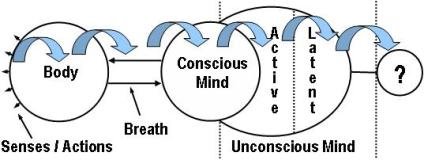
Yoga or "Union" is attained by first training, balancing, and purifying each of the aspects of our being individually, and then systematically receding attention inward through those levels, expanding so as to experience the state of Union, Yoga, Samadhi, or Turiya.
Showing posts with label kundalini. Show all posts
Showing posts with label kundalini. Show all posts
Tuesday, September 02, 2008
41 Swami Rama videos - Sri Vidya Tantra Vedanta Yoga Meditation
Here is a link to 41 Swami Rama videos that have shown up on YouTube:
http://www.youtube.com/swamiramahimalayas
Playlist of the videos:
http://www.youtube.com/view_play_list?p=61035752268BE45B
SRI VIDYA TANTRA YOGA MEDITATION
SAUNDARYALAHARI, WAVE OF BEAUTY
Swami Rama
The description on the first video is:
Four lectures by Swami Rama on Saundaryalahari, the Wave of Beauty,which is a prominent text of Sri Vidya Tantra. The wave ofcreativity, love and bliss of Shakti is one and the same with Shiva.The lectures contain practical advice on advanced meditationpractices of Yoga, Vedanta, and Tantra. The four lectures are dividedinto a total of 41 parts for the YouTube presentation.


Sunday, March 02, 2008
VIDEO: Diaphragmatic Breathing for Advanced Yoga Meditation
NEW VIDEO (5:34Minutes)
Diaphragmatic Breathing for Advanced Yoga Meditation
By Swami Jnaneshvara Bharati
YouTube link:
http://www.youtube.com/watch?v=cc_fQMdKJqU
MySpace link:
http://myspacetv.com/index.cfm?fuseaction=vids.individual&videoid=27355180
Proper diaphragmatic breathing is a central foundation practice for
one who wishes to move on to advanced meditation, to experience the
highest direct experiences of Yoga. One of the challenges to
breathing diaphragmatically is in knowing exactly where the diaphragm
is located, and how it works. When breathing diaphragmatically, the
muscles of the abdomen, chest, and clavicles are not involved. They
remain still, while the diaphragm gently contracts on inhalation, and
releases on exhalation. Breath is an extremely useful part of the
systematic process of Yoga meditation, which leads one beyond the
breath to the finer, subtler practices and experiences. There is
tremendous value in understanding the process of breathing, and in
diligently, gently practicing diaphragmatic breathing.
http://www.swamij.com/
Diaphragmatic Breathing for Advanced Yoga Meditation
By Swami Jnaneshvara Bharati
YouTube link:
http://www.youtube.com/watch?v=cc_fQMdKJqU
MySpace link:
http://myspacetv.com/index.cfm?fuseaction=vids.individual&videoid=27355180
Proper diaphragmatic breathing is a central foundation practice for
one who wishes to move on to advanced meditation, to experience the
highest direct experiences of Yoga. One of the challenges to
breathing diaphragmatically is in knowing exactly where the diaphragm
is located, and how it works. When breathing diaphragmatically, the
muscles of the abdomen, chest, and clavicles are not involved. They
remain still, while the diaphragm gently contracts on inhalation, and
releases on exhalation. Breath is an extremely useful part of the
systematic process of Yoga meditation, which leads one beyond the
breath to the finer, subtler practices and experiences. There is
tremendous value in understanding the process of breathing, and in
diligently, gently practicing diaphragmatic breathing.
http://www.swamij.com/
Monday, September 03, 2007
Mandukya Upanishad on Om Mantra: Yoga Meditation (VIDEO 9:30)
Mandukya Upanishad on Om Mantra: Yoga Meditation (VIDEO 9:30)
This video is on the Om Mantra as outlined in the Mandukya Upanishad. The pinnacle of the wisdom of the ancient sages is contained in these terse twelve verses, which outline the philosophy and practices of the Om mantra (written as either AUM or OM). The three stages plus the fourth of Om mantra are central to Yoga Meditation, Advaita Vedanta, and Samaya Sri Vidya Tantra.
VIDEO (9:30 minutes):
Click here for VIDEO at YouTube:
http://youtube.com/watch?v=fNruveUaeRg
Click here for VIDEO at MySpace:
http://myspacetv.com/index.cfm?fuseaction=vids.individual&videoid=17293431
http://www.swamij.com/
This video is on the Om Mantra as outlined in the Mandukya Upanishad. The pinnacle of the wisdom of the ancient sages is contained in these terse twelve verses, which outline the philosophy and practices of the Om mantra (written as either AUM or OM). The three stages plus the fourth of Om mantra are central to Yoga Meditation, Advaita Vedanta, and Samaya Sri Vidya Tantra.
VIDEO (9:30 minutes):
Click here for VIDEO at YouTube:
http://youtube.com/watch?v=fNruveUaeRg
Click here for VIDEO at MySpace:
http://myspacetv.com/index.cfm?fuseaction=vids.individual&videoid=17293431
http://www.swamij.com/
Monday, December 25, 2006
The Process of Kundalini Awakening
Excerpted from:
http://www.swamij.com/kundalini-awakening.htm
(There are useful graphics at this link. This newsletter is 1 of 7 sequential web pages at SwamiJ.com on Kundalini Awakening. The other pages are available at the link above.)
THE PROCESS OF KUNDALINI AWAKENING
Swami Jnaneshvara Bharati
KUNDALINI IS INNATE FOR ALL PEOPLE:
At the base of the spine, subtler than the physical body, lies the Kundalini energy, or spiritual energy, in a latent form. Regardless of what religious, spiritual, or meditation tradition one follows, the awakening of this energy, by whatever name you call it, is a most innate and essential part of spiritual advancement, unfoldment, or realization. Awakening kundalini and leading it to union with the Absolute is the goal of the Himalayan sages and the path of Yoga, Vedanta, and Tantra.
http://www.swamij.com/tradition.htm
http://www.swamij.com/yoga-vedanta-tantra.htm
See also the article:
Bindu: Pinnacle of Yoga, Vedanta and Tantra
http://www.swamij.com/bindu.htm
Also, listen to the audio (mp3):
The Secret of Shiva and Shakti
http://swamij.com/Sounds/shiva-shakti-same-swami-j.mp3
http://swamij.com/loop-secret-shiva-shakti.htm
STAGES IN KUNDALINI AWAKENING:
The graphics above display the seven major chakras (section #5), the left and right energies of Ida and Pingala (section #1), and the Sushumna nadi, the central channel that courses through the chakras (Sushumna is sometimes called "silver cord"). The six graphics visually represent the process of Kundalini Awakening. Clicking on each of the six graphics will move you through explanations of the stages. Also, there is an index for the contents of these pages.
http://www.swamij.com/kundalini-awakening-index.htm
The six stages are:
1) Prana usually flow in Ida or Pingala
2) Prana is made to flow in Ida and Pingala
3) Prana is made to flow in Sushumna
4) Kundalini energy is awakened
5) Kundalini is lead upwards
6) Kundalini rises to Sahasrara
NUMBER OF STAGES IN KUNDALINI AWAKENING:
There is nothing especially significant about describing this Kundalini Awakening in six stages (the six graphics), as opposed to some other number; it is simply a convenient way to explain the process. The simplest way of describing the entire process is in three stages:
1) Awakening, opening, or applying Sushumna
2) Awakening Kundalini
3) Kundalini arising to the crown Chakra, Sahasrara
ONE ENERGY WITH MANY NAMES AND FORMS:
There is one energy (Shakti) that keeps taking on new shapes and forms. Each time the energy takes on a new form, we give it a new name. See the article Kundalini, Shakti, and a River for an explanation of these names and forms.
http://www.swamij.com/shakti.htm
SHIVA AND SHAKTI:
Tantra considers the universe to be a manifestation of pure consciousness. Through this process of manifesting, consciousness divides itself into two parts, which, though seeming to be separate, cannot exist without one another.
Shiva remains as a static, formless quality.
Shakti is a dynamic, creative aspect.
SCIENCE AND PHYSICS:
Modern science also considers these two forms of energy, though viewing them in different ways. Science includes, for example, potential energy and kinetic energy (the energy of motion), recognizing that they are both manifestations of the same underlying energy. Tantra describes the unification of all as the pouring out of the energy of consciousness through the manifestation of the static (Shiva) through a veiling and projecting process (Shakti), creating the levels of the universe. At the physical level, modern physics also seeks to find a unifying source, and is in the process of explaining this unification through quark and string theories.
LIKE INK AND THE WORD:
Shiva and Shakti are inseparable and coexist, like ink and the written word, which, though one and the same, are different. With one pen of ink, many different words or images can be manifested, although there remains only one container (pen) of ink. It is that creative process of manifestation that makes the ink appear to have different forms and meaning from one word to the next. When you write different words, or draw both a circle and a square, you have not created a single ink molecule, but have only rearranged the existing molecules, creating the appearance of different words or forms. It remains exactly what it was in the first place, which is ink. This is not negative or merely intellectually reductionistic, but is a most awesome, beautiful process. Similarly, the unmanifest Shiva can manifest into countless forms through the creative appearance of Shakti. Simple metaphors such as ink and written word can be extremely useful to contemplate on, so as to understand the principle of the one appearing to be two, and how these two dance together to form the elegant complexity of manifest reality.
http://www.swamij.com/shakti.htm
EXPERIENCING THEIR UNION:
The journey of Tantra and Kundalini Yoga leads to Kundalini Awakening and to the realization of the Absolute, where these two apparently different aspects of manifestation are experienced in their original union. Yoga means union, or joining, and this union of the static and the dynamic is the meaning of Yoga (see also Yoga Sutras, particularly sutras 1.1-1.4, which define Yoga). Through the process of going ever deeper or higher in practices relating to your own constitution, one repeatedly comes to see the way in which seemingly different realities and self-identities are only apparent, and that manifestation is the mere play of the creative aspect of Shakti with the static aspect of Shiva.
http://www.swamij.com/yoga-sutras.htm
http://www.swamij.com/yoga-sutras-10104.htm
CONCEPTS OF SHIVA AND SHAKTI:
As with many principles of reality, some religious people and traditions conceptualize Shiva and Shakti as anthropomorphic deities, while others view the two as principles and processes of the universe. In either case, the journey of Kundalini Awakening is an inner experience, going from gross to subtle, to subtler, and subtle most, to one's own center of consciousness, by whatever name you choose to call that. In this article, Shiva and Shakti are seen to be the two principles and processes of static and dynamic, as noted several paragraphs above.
See also the article:
Secret of Shiva and Shakti
http://www.swamij.com/shiva-shakti-secret.htm
MEANING OF KUNDA AND KUNDALA:
Kunda means bowl, or cave, and refers to the bowl of fire of consciousness resting in the first chakra at the base of the spine. Lini refers to that which resides in that bowl. Kundala means coiled, as the Shakti forms in a coil there.
MEANING OF SHAK:
The word shak is the root word of Shakti, and means to be able, or to have power. Hence, Kundalini Shakti is the power of consciousness that is coiled in a latent form, in the base of the spine.
EXTERNAL AND INTERNAL PRACTICE:
For those who are lesser prepared, the path of external practices (bahiyayag) is preferred, which may include external forms of rituals or symbolic gestures. For those who are prepared, the path of internal practices (antaryag) is available, which involves making the mind one-pointed and doing introspection.
KAULA, MISHRA, AND SAMAYA TANTRA:
The three schools of tantra are kaula, mishra, and samaya. The kaula school starts with the lower chakras, and involves external practices. The mishra school also works with external practices, and emphasizes the central chakras. The samaya school is the highest, emphasizing the upper chakras. It involves no external practices, focusing only on the inner (antaryag) practices. (The Tantra practice of Yoga Nidra is extremely effective in opening, balancing and purifying the chakras. See also the page describing the Yoga Nidra CD.)
http://www.swamij.com/tantra.htm
http://www.swamij.com/yoga-nidra.htm
http://www.swamij.com/cd-yoga-nidra.htm
REGULATING THE PRIMITIVE INCLINATIONS:
Before treading the later stages of Kundalini Awakening, it is very important to manage the basic urges. Otherwise, the surge of energy may not be handled very well. This means regulating the four primitive fountains of food, sleep, sex, and self-preservation.
http://www.swamij.com/lifestyle.htm
SPONTANEOUS KUNDALINI AWAKENING:
The approach of these writings is to describe the systematic process of intentional Kundalini Awakening. However, it may also come spontaneously to people who have done no intentional practices. One may argue that spontaneous awakening may be coming as a result of previous practices that are not remembered, but in either case the perception of the individual may be that nothing was done to bring forward the experience.
INTEGRATING THE EFFECTS:
Regardless of whether Kundalini Awakening comes spontaneously or through practices, there may be some amount of time and effort needed to integrate the effects of such experiences into the body and personality. It is a time when stabilizing actions are important, including daily exercise, high quality food, regular sleep patterns, and healthy relationships with other people. During this time is very useful to be around someone who has knowledge of this process, and has experienced it personally.
PREPARATION IS MOST IMPORTANT:
Preparation is much more important than the practices of Kundalini Awakening themselves. If one skips the basics and the preparation of body, breath, and mind, then the surge of energy can be more disruptive than beneficial. In the Himalayan tradition Yoga, Vedanta, and Tantra go together, with a solid foundation being built first. The practices of yoga nidra and bhuta shuddhi (chakra meditation) can be quite useful.
http://www.swamij.com/yoga-vedanta-tantra.htm
http://www.swamij.com/yoga-nidra.htm
http://www.swamij.com/chakra-meditation.htm
http://www.swamij.com/kundalini-awakening.htm
(There are useful graphics at this link. This newsletter is 1 of 7 sequential web pages at SwamiJ.com on Kundalini Awakening. The other pages are available at the link above.)
THE PROCESS OF KUNDALINI AWAKENING
Swami Jnaneshvara Bharati
KUNDALINI IS INNATE FOR ALL PEOPLE:
At the base of the spine, subtler than the physical body, lies the Kundalini energy, or spiritual energy, in a latent form. Regardless of what religious, spiritual, or meditation tradition one follows, the awakening of this energy, by whatever name you call it, is a most innate and essential part of spiritual advancement, unfoldment, or realization. Awakening kundalini and leading it to union with the Absolute is the goal of the Himalayan sages and the path of Yoga, Vedanta, and Tantra.
http://www.swamij.com/tradition.htm
http://www.swamij.com/yoga-vedanta-tantra.htm
See also the article:
Bindu: Pinnacle of Yoga, Vedanta and Tantra
http://www.swamij.com/bindu.htm
Also, listen to the audio (mp3):
The Secret of Shiva and Shakti
http://swamij.com/Sounds/shiva-shakti-same-swami-j.mp3
http://swamij.com/loop-secret-shiva-shakti.htm
STAGES IN KUNDALINI AWAKENING:
The graphics above display the seven major chakras (section #5), the left and right energies of Ida and Pingala (section #1), and the Sushumna nadi, the central channel that courses through the chakras (Sushumna is sometimes called "silver cord"). The six graphics visually represent the process of Kundalini Awakening. Clicking on each of the six graphics will move you through explanations of the stages. Also, there is an index for the contents of these pages.
http://www.swamij.com/kundalini-awakening-index.htm
The six stages are:
1) Prana usually flow in Ida or Pingala
2) Prana is made to flow in Ida and Pingala
3) Prana is made to flow in Sushumna
4) Kundalini energy is awakened
5) Kundalini is lead upwards
6) Kundalini rises to Sahasrara
NUMBER OF STAGES IN KUNDALINI AWAKENING:
There is nothing especially significant about describing this Kundalini Awakening in six stages (the six graphics), as opposed to some other number; it is simply a convenient way to explain the process. The simplest way of describing the entire process is in three stages:
1) Awakening, opening, or applying Sushumna
2) Awakening Kundalini
3) Kundalini arising to the crown Chakra, Sahasrara
ONE ENERGY WITH MANY NAMES AND FORMS:
There is one energy (Shakti) that keeps taking on new shapes and forms. Each time the energy takes on a new form, we give it a new name. See the article Kundalini, Shakti, and a River for an explanation of these names and forms.
http://www.swamij.com/shakti.htm
SHIVA AND SHAKTI:
Tantra considers the universe to be a manifestation of pure consciousness. Through this process of manifesting, consciousness divides itself into two parts, which, though seeming to be separate, cannot exist without one another.
Shiva remains as a static, formless quality.
Shakti is a dynamic, creative aspect.
SCIENCE AND PHYSICS:
Modern science also considers these two forms of energy, though viewing them in different ways. Science includes, for example, potential energy and kinetic energy (the energy of motion), recognizing that they are both manifestations of the same underlying energy. Tantra describes the unification of all as the pouring out of the energy of consciousness through the manifestation of the static (Shiva) through a veiling and projecting process (Shakti), creating the levels of the universe. At the physical level, modern physics also seeks to find a unifying source, and is in the process of explaining this unification through quark and string theories.
LIKE INK AND THE WORD:
Shiva and Shakti are inseparable and coexist, like ink and the written word, which, though one and the same, are different. With one pen of ink, many different words or images can be manifested, although there remains only one container (pen) of ink. It is that creative process of manifestation that makes the ink appear to have different forms and meaning from one word to the next. When you write different words, or draw both a circle and a square, you have not created a single ink molecule, but have only rearranged the existing molecules, creating the appearance of different words or forms. It remains exactly what it was in the first place, which is ink. This is not negative or merely intellectually reductionistic, but is a most awesome, beautiful process. Similarly, the unmanifest Shiva can manifest into countless forms through the creative appearance of Shakti. Simple metaphors such as ink and written word can be extremely useful to contemplate on, so as to understand the principle of the one appearing to be two, and how these two dance together to form the elegant complexity of manifest reality.
http://www.swamij.com/shakti.htm
EXPERIENCING THEIR UNION:
The journey of Tantra and Kundalini Yoga leads to Kundalini Awakening and to the realization of the Absolute, where these two apparently different aspects of manifestation are experienced in their original union. Yoga means union, or joining, and this union of the static and the dynamic is the meaning of Yoga (see also Yoga Sutras, particularly sutras 1.1-1.4, which define Yoga). Through the process of going ever deeper or higher in practices relating to your own constitution, one repeatedly comes to see the way in which seemingly different realities and self-identities are only apparent, and that manifestation is the mere play of the creative aspect of Shakti with the static aspect of Shiva.
http://www.swamij.com/yoga-sutras.htm
http://www.swamij.com/yoga-sutras-10104.htm
CONCEPTS OF SHIVA AND SHAKTI:
As with many principles of reality, some religious people and traditions conceptualize Shiva and Shakti as anthropomorphic deities, while others view the two as principles and processes of the universe. In either case, the journey of Kundalini Awakening is an inner experience, going from gross to subtle, to subtler, and subtle most, to one's own center of consciousness, by whatever name you choose to call that. In this article, Shiva and Shakti are seen to be the two principles and processes of static and dynamic, as noted several paragraphs above.
See also the article:
Secret of Shiva and Shakti
http://www.swamij.com/shiva-shakti-secret.htm
MEANING OF KUNDA AND KUNDALA:
Kunda means bowl, or cave, and refers to the bowl of fire of consciousness resting in the first chakra at the base of the spine. Lini refers to that which resides in that bowl. Kundala means coiled, as the Shakti forms in a coil there.
MEANING OF SHAK:
The word shak is the root word of Shakti, and means to be able, or to have power. Hence, Kundalini Shakti is the power of consciousness that is coiled in a latent form, in the base of the spine.
EXTERNAL AND INTERNAL PRACTICE:
For those who are lesser prepared, the path of external practices (bahiyayag) is preferred, which may include external forms of rituals or symbolic gestures. For those who are prepared, the path of internal practices (antaryag) is available, which involves making the mind one-pointed and doing introspection.
KAULA, MISHRA, AND SAMAYA TANTRA:
The three schools of tantra are kaula, mishra, and samaya. The kaula school starts with the lower chakras, and involves external practices. The mishra school also works with external practices, and emphasizes the central chakras. The samaya school is the highest, emphasizing the upper chakras. It involves no external practices, focusing only on the inner (antaryag) practices. (The Tantra practice of Yoga Nidra is extremely effective in opening, balancing and purifying the chakras. See also the page describing the Yoga Nidra CD.)
http://www.swamij.com/tantra.htm
http://www.swamij.com/yoga-nidra.htm
http://www.swamij.com/cd-yoga-nidra.htm
REGULATING THE PRIMITIVE INCLINATIONS:
Before treading the later stages of Kundalini Awakening, it is very important to manage the basic urges. Otherwise, the surge of energy may not be handled very well. This means regulating the four primitive fountains of food, sleep, sex, and self-preservation.
http://www.swamij.com/lifestyle.htm
SPONTANEOUS KUNDALINI AWAKENING:
The approach of these writings is to describe the systematic process of intentional Kundalini Awakening. However, it may also come spontaneously to people who have done no intentional practices. One may argue that spontaneous awakening may be coming as a result of previous practices that are not remembered, but in either case the perception of the individual may be that nothing was done to bring forward the experience.
INTEGRATING THE EFFECTS:
Regardless of whether Kundalini Awakening comes spontaneously or through practices, there may be some amount of time and effort needed to integrate the effects of such experiences into the body and personality. It is a time when stabilizing actions are important, including daily exercise, high quality food, regular sleep patterns, and healthy relationships with other people. During this time is very useful to be around someone who has knowledge of this process, and has experienced it personally.
PREPARATION IS MOST IMPORTANT:
Preparation is much more important than the practices of Kundalini Awakening themselves. If one skips the basics and the preparation of body, breath, and mind, then the surge of energy can be more disruptive than beneficial. In the Himalayan tradition Yoga, Vedanta, and Tantra go together, with a solid foundation being built first. The practices of yoga nidra and bhuta shuddhi (chakra meditation) can be quite useful.
http://www.swamij.com/yoga-vedanta-tantra.htm
http://www.swamij.com/yoga-nidra.htm
http://www.swamij.com/chakra-meditation.htm
Subscribe to:
Posts (Atom)


