YOGA AND INSTITUTIONAL RELIGION
Swami Jnaneshvara Bharati
Recorded January 4, 2006
3 minutes, 26 seconds
Click here to listen to the audio Podcast:
http://www.swamij.com/podcast/070104-yoga-institutional-religion.mp3
Yoga is in religion, but religion is not in Yoga. The principles of Yoga are (in alphabetical order) in Buddhism, Christianity, Hinduism, Islam, Jainism, Judaism, Sikhism, and most of the other religions. However, unlike religions, Yoga itself has no deity, worship services, rituals, sacred icons, creed, confession, clergy, institutions, congregation, membership procedure, or system of temples or churches. The word "Yoga" means "union" referring to the direct experience of the wholeness of ourselves at all levels. While the word "Yoga" comes from traditional Sanskrit language, that union is a universal process. The inner calling for that wholeness has also been called the "mystic" longing.
The yogis and mystics seek the esoteric end of the polarity of esoteric-exoteric. However, since the world of religions is dominated by the exoteric orthodoxy, the mystic and yogi is rarely understood. One who has been to the top of the spiritual mountain in direct experience may say, when asked what was discovered, "Yahweh; Ehyeh," or "I am that I am." He or she may say, "The father and I are one." She or he may say, "Sohum" which is Sanskrit for "I am that." He or she may go as far as to say, "I am God," in the spirit that the wave and the ocean are one and the same. That direct experience aligns with the immanent end of the immanent-transcendent polarity, but not being understood, comes across as a threat to the religionists. As if that is not enough of a threat, the mystics and yogis seek to trace their way back to the original material cause, rather than myopically focus on a projected efficient cause.
Because of their direct experience of the esoteric, immanent, and material causes--rather than mere belief--the mystics and yogis who are unwilling to renounce that direct experience and pledge loyalty to the orthodox religious institutions and their leaders have been beaten, hung, shot, crucified, beheaded, burned at the stake, and otherwise murdered. They have been outright banished or coerced to leave the cities and communities of the fear-filled religionists so as to live alone in the deserts, forests, or high mountains. Modern religions, cultures, and even religion classes insist on categorizing and classifying the mystics and yogis, attempting to force them into rigid boxes of institutional religious identity.
It remains as true today as always, that the mystics and yogis prefer to remain invisible, outside of the mainstream view, as they live far outside the center of the bell curve called "most people." Yet, the number of people with this level of deep longing for direct experience rather than mere blind faith is so large that there is an increasing need for higher visibility of the authentic mystics and yogis. As long as humanity is here, there will continue to be mystics and yogis longing for, seeking, and attaining the direct experience of the highest truth, self, reality, infinity, god, or whatever term one wants to use for that. The realized yogis and mystics drift here and there in our world so as to serve those few.
SWAMIJ.COM AUDIO PODCAST WEB PAGE & ARCHIVES:
http://www.swamij.com/podcast.htm
SWAMI J PODCAST also available through I-Tunes, Podcast.net,
Yahoo.com, Odeo.com and others.
http://swamij.com
Attaining Yoga or Union:
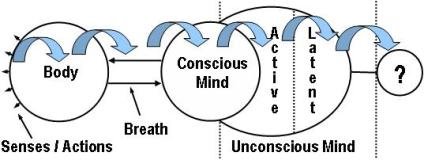
Yoga or "Union" is attained by first training, balancing, and purifying each of the aspects of our being individually, and then systematically receding attention inward through those levels, expanding so as to experience the state of Union, Yoga, Samadhi, or Turiya.
Sunday, January 07, 2007
Reason for the Eight Rungs of Yoga
REASON FOR THE EIGHT RUNGS OF YOGA
Swami Jnaneshvara
The Eight Rungs of Yoga are well known, and are (including Yoga Sutra
references):
1) Yama: codes of restraint, abstinences (2.30, 2.31)
2) Niyama: observances, self-training (2.32)
3) Asana: meditation posture (2.46-2.48)
4) Pranayama: expansion of breath and prana (2.49-2.53)
5) Pratyahara: withdrawal of the senses (2.54-2.55)
6) Dharana: concentration (3.1)
7) Dhyana: meditation (3.2)
8) Samadhi: deep absorption (3.3)
Dharana, Dhyana, and Samadhi are together known as Samyama, which is described in Sutras 3.4-3.6:
http://www.swamij.com/yoga-sutras-30406.htm
WHY?
However, WHAT IS THE REASON for doing those Eight Rungs? This is often overlooked. The Eight Rungs are presented in the 29th Sutra of Chapter 2 of the Yoga Sutras. The reason for doing them is presented in the three sutras just before that. According to Patanjali, codifier of the Yoga Sutras, the reason for the eight rungs is DISCERNMENT or DISCRIMINATION (viveka) so that one may gradually reveal the true self that remains after all of the false identities are set aside. It is an extremely important principle for the Yogi or Yogini to be aware of. All of the work with body, breath, and the more surface levels of mind is done so as to cultivate this subtler tool of enlightenment.
From YOGA SUTRAS 2.26-2.29:
http://www.swamij.com/yoga-sutras-22629.htm
Clear, distinct, unimpaired DISCRIMINATIVE KNOWLEDGE is the means of liberation from this alliance [referring to the alliance of consciousness with thoughts and avidya, ignorance described in previous sutras]. Seven kinds of ultimate insight come to one who has attained this degree of discrimination. Through the practice of the different limbs, or steps to Yoga, whereby impurities are eliminated, there arises an illumination that culminates in DISCRIMINATIVE WISDOM, or enlightenment [VIVKEKA KHYATIH]. The eight rungs, limbs, or steps of Yoga are the codes of self-regulation or restraint (yamas), observances or practices of self-training (niyamas), postures (asana), expansion of breath and prana (pranayama), withdrawal of the senses (pratyahara), concentration (dharana), meditation (dhyana), and perfected concentration (samadhi).
MORE INFO from the website on the Reason for the Eight Rungs:
http://www.swamij.com/yoga-sutras-22629.htm
NEWSLETTER on Yoga Sutras:
http://groups.yahoo.com/group/Yoga-Sutras/
MAIN PAGE of Yoga Sutras:
http://www.swamij.com/yoga-sutras.htm
INTRODUCTION to Yoga Sutras:
http://www.swamij.com/yoga-sutras-intro.htm
Swami Jnaneshvara
The Eight Rungs of Yoga are well known, and are (including Yoga Sutra
references):
1) Yama: codes of restraint, abstinences (2.30, 2.31)
2) Niyama: observances, self-training (2.32)
3) Asana: meditation posture (2.46-2.48)
4) Pranayama: expansion of breath and prana (2.49-2.53)
5) Pratyahara: withdrawal of the senses (2.54-2.55)
6) Dharana: concentration (3.1)
7) Dhyana: meditation (3.2)
8) Samadhi: deep absorption (3.3)
Dharana, Dhyana, and Samadhi are together known as Samyama, which is described in Sutras 3.4-3.6:
http://www.swamij.com/yoga-sutras-30406.htm
WHY?
However, WHAT IS THE REASON for doing those Eight Rungs? This is often overlooked. The Eight Rungs are presented in the 29th Sutra of Chapter 2 of the Yoga Sutras. The reason for doing them is presented in the three sutras just before that. According to Patanjali, codifier of the Yoga Sutras, the reason for the eight rungs is DISCERNMENT or DISCRIMINATION (viveka) so that one may gradually reveal the true self that remains after all of the false identities are set aside. It is an extremely important principle for the Yogi or Yogini to be aware of. All of the work with body, breath, and the more surface levels of mind is done so as to cultivate this subtler tool of enlightenment.
From YOGA SUTRAS 2.26-2.29:
http://www.swamij.com/yoga-sutras-22629.htm
Clear, distinct, unimpaired DISCRIMINATIVE KNOWLEDGE is the means of liberation from this alliance [referring to the alliance of consciousness with thoughts and avidya, ignorance described in previous sutras]. Seven kinds of ultimate insight come to one who has attained this degree of discrimination. Through the practice of the different limbs, or steps to Yoga, whereby impurities are eliminated, there arises an illumination that culminates in DISCRIMINATIVE WISDOM, or enlightenment [VIVKEKA KHYATIH]. The eight rungs, limbs, or steps of Yoga are the codes of self-regulation or restraint (yamas), observances or practices of self-training (niyamas), postures (asana), expansion of breath and prana (pranayama), withdrawal of the senses (pratyahara), concentration (dharana), meditation (dhyana), and perfected concentration (samadhi).
MORE INFO from the website on the Reason for the Eight Rungs:
http://www.swamij.com/yoga-sutras-22629.htm
NEWSLETTER on Yoga Sutras:
http://groups.yahoo.com/group/Yoga-Sutras/
MAIN PAGE of Yoga Sutras:
http://www.swamij.com/yoga-sutras.htm
INTRODUCTION to Yoga Sutras:
http://www.swamij.com/yoga-sutras-intro.htm


In Your Meditations This New Year
AUDIO Recording:
http://swamij.com/Sounds/Meditations-New-Year.mp3
IN YOUR MEDITATIONS THIS NEW YEAR
In your meditations this new year....
May your body be still and comfortable....
May your head, neck and trunk be aligned....
May your breath be smooth, slow, serene, and with no pauses....
May the flow of thoughts in your mind not disturb you....
May your meditations this new year bring you peace, happiness and bliss....
AUDIO Recording:
http://swamij.com/Sounds/Meditations-New-Year.mp3
In loving service,
Swami J
http://swamij.com
http://swamij.com/Sounds/Meditations-New-Year.mp3
IN YOUR MEDITATIONS THIS NEW YEAR
In your meditations this new year....
May your body be still and comfortable....
May your head, neck and trunk be aligned....
May your breath be smooth, slow, serene, and with no pauses....
May the flow of thoughts in your mind not disturb you....
May your meditations this new year bring you peace, happiness and bliss....
AUDIO Recording:
http://swamij.com/Sounds/Meditations-New-Year.mp3
In loving service,
Swami J
http://swamij.com
Thursday, January 04, 2007
Transitions: New Years and New Moments in Life and Meditation
TRANSITIONS: NEW YEARS AND NEW MOMENTS IN LIFE AND MEDITATION
Swami Jnaneshvara Bharati
Recorded December 30, 2006
1 hour, 9 minutes, 25 seconds
Click here to listen to the audio Podcast:
http://www.swamij.com/podcast/061230-transitions.mp3
The transition from one year to the next year happens in an infinitely short moment that is actually non-existent in time. So too, there are transitions in the moments of life and the moments of meditation. Mindfulness of transitions in daily life and during meditation time is extremely useful on the spiritual journey to enlightenment. The recording ends with a 15-minute guided contemplative meditation on Transitions, which begins at 54:42.
SWAMIJ.COM AUDIO PODCAST WEB PAGE & ARCHIVES:
http://www.swamij.com/podcast.htm
SWAMI J PODCAST also available through I-Tunes, Podcast.net, Yahoo.com, Odeo.com and others.
Swami Jnaneshvara Bharati
Recorded December 30, 2006
1 hour, 9 minutes, 25 seconds
Click here to listen to the audio Podcast:
http://www.swamij.com/podcast/061230-transitions.mp3
The transition from one year to the next year happens in an infinitely short moment that is actually non-existent in time. So too, there are transitions in the moments of life and the moments of meditation. Mindfulness of transitions in daily life and during meditation time is extremely useful on the spiritual journey to enlightenment. The recording ends with a 15-minute guided contemplative meditation on Transitions, which begins at 54:42.
SWAMIJ.COM AUDIO PODCAST WEB PAGE & ARCHIVES:
http://www.swamij.com/podcast.htm
SWAMI J PODCAST also available through I-Tunes, Podcast.net, Yahoo.com, Odeo.com and others.
Sunday, December 31, 2006
Attachment is the Greatest Obstacle to Realization
From Sacred Journey
By Swami Rama
ISBN 8188157007
Reprinted with permission of the Publisher
Copyright Himalayan Institute Hospital Trust
http://hihtindia.org/
ATTACHMENT IS THE GREATEST OBSTACLE TO REALIZATION
Swami Rama
The greatest obstacle in the path of realization is attachment to the body and to the objects of the world. This attachment makes us slaves. It is because of our attachments that we experience fear of death and loss. The more body-conscious and body-attached a person is, the greater the fear of dying.
The same principle applies to people who are attached to the things of the world, to their houses, property, clothing, jewelry, and money. They fear losing those things because they somehow offer meaning, identity, and worth. People also become very attached to other people. The emotion they feel for others gives them an identity and they fear giving up that identity in death. They fear the deaths of those to whom they are attached for similar reasons. If one's identity is somehow defined by attachment to others, the death of others then affects that identity.
The solution is to do away with these attachments to the body, property, possessions, and other people. This point cannot be made often enough. Reducing and finally eliminating attachments does not mean to escape life, to deny the enjoyment of life, or in any way to
diminish life's value. Just the opposite occurs. Life is enhanced, enriched and expanded by reducing attachments. The person learns to love and give and open up to others and to the events of the world.
Attachment means to grip, clasp, grasp, and hold on tightly. When death comes all that was being clutched and grasped is wrenched away. The tighter something is held, the greater will be the wrenching away, the deeper will be the pain. If life has been led with open hands, with no attachments, then death comes but there is nothing to be wrenched away.
We cannot all of a sudden wake one moment and let go of all attachments. It is a lifetime's work to undo the habit of forming attachments and requires attention every day, because the attractions and temptations of the world constantly work to strengthen attachments.
http://swamij.com
By Swami Rama
ISBN 8188157007
Reprinted with permission of the Publisher
Copyright Himalayan Institute Hospital Trust
http://hihtindia.org/
ATTACHMENT IS THE GREATEST OBSTACLE TO REALIZATION
Swami Rama
The greatest obstacle in the path of realization is attachment to the body and to the objects of the world. This attachment makes us slaves. It is because of our attachments that we experience fear of death and loss. The more body-conscious and body-attached a person is, the greater the fear of dying.
The same principle applies to people who are attached to the things of the world, to their houses, property, clothing, jewelry, and money. They fear losing those things because they somehow offer meaning, identity, and worth. People also become very attached to other people. The emotion they feel for others gives them an identity and they fear giving up that identity in death. They fear the deaths of those to whom they are attached for similar reasons. If one's identity is somehow defined by attachment to others, the death of others then affects that identity.
The solution is to do away with these attachments to the body, property, possessions, and other people. This point cannot be made often enough. Reducing and finally eliminating attachments does not mean to escape life, to deny the enjoyment of life, or in any way to
diminish life's value. Just the opposite occurs. Life is enhanced, enriched and expanded by reducing attachments. The person learns to love and give and open up to others and to the events of the world.
Attachment means to grip, clasp, grasp, and hold on tightly. When death comes all that was being clutched and grasped is wrenched away. The tighter something is held, the greater will be the wrenching away, the deeper will be the pain. If life has been led with open hands, with no attachments, then death comes but there is nothing to be wrenched away.
We cannot all of a sudden wake one moment and let go of all attachments. It is a lifetime's work to undo the habit of forming attachments and requires attention every day, because the attractions and temptations of the world constantly work to strengthen attachments.
http://swamij.com
Monday, December 25, 2006
Meditation on Form and Formless; Knowledge and Devotion
Audio Pocast:
MEDITATION ON SAGUNA (FORM) AND NIRGUNA (FORMLESS),
KNOWLEDGE AND DEVOTION
Swami Jnaneshvara Bharati
Recorded December 23, 2006
1 hour, 13 minutes, 9 seconds
Click here to listen to the audio Podcast:
http://www.swamij.com/podcast/061223-saguna-nirguna.mp3
This conversation is about Saguna and Nirguna, and the paths of
meditation and contemplation with form or without form, which is
related to the paths of Knowing (Jnana Yoga) and Devotion (Bhakti
Yoga). The discussion involves the approaches individually, and how
the work together. The recording ends with a 17-minute guided
contemplative meditation on either Form or the Formless, which begins
at 55:47.
SWAMIJ.COM AUDIO PODCAST WEB PAGE & ARCHIVES:
http://www.swamij.com/podcast.htm
SWAMI J PODCAST also available through I-Tunes, Podcast.net,
Yahoo.com, Odeo.com and others.
MEDITATION ON SAGUNA (FORM) AND NIRGUNA (FORMLESS),
KNOWLEDGE AND DEVOTION
Swami Jnaneshvara Bharati
Recorded December 23, 2006
1 hour, 13 minutes, 9 seconds
Click here to listen to the audio Podcast:
http://www.swamij.com/podcast/061223-saguna-nirguna.mp3
This conversation is about Saguna and Nirguna, and the paths of
meditation and contemplation with form or without form, which is
related to the paths of Knowing (Jnana Yoga) and Devotion (Bhakti
Yoga). The discussion involves the approaches individually, and how
the work together. The recording ends with a 17-minute guided
contemplative meditation on either Form or the Formless, which begins
at 55:47.
SWAMIJ.COM AUDIO PODCAST WEB PAGE & ARCHIVES:
http://www.swamij.com/podcast.htm
SWAMI J PODCAST also available through I-Tunes, Podcast.net,
Yahoo.com, Odeo.com and others.
Teaching Meditation to Children
From:
Let the Bud of Life Bloom
A Guide to Raising Happy and Healthy Children
By Swami Rama
ISBN 818815704X
Reprinted with permission of the Publisher
Copyright Himalayan Institute Hospital Trust
http://hihtindia.org/
TEACHING MEDITATION TO CHILDREN
Swami Rama
When you practice meditation, initially you come in touch with
yourself and all your thought patterns; you come to understand your
inner dialogue. Then, you learn to discriminate—to select and reject;
and finally, you learn how to work with yourself. These seeds should
be sown in childhood.
Instead, believers of all faiths, clinging to external rituals,
impose their ideals on their children and force them to participate
in their time-honored customs. Children are taught to love and to
worship pictures of Christ, Krishna, or other gods and goddesses, and
sometimes even community or religious leaders. This does not help
them to become independent or to acquire peace of mind. Children need
to be taught how to cultivate divine virtues within themselves; they
need to be taught how to look within, and how to find within in order
to attain freedom. I think if everyone were to be given a spiritual
education in childhood, they would have fewer problems living in the
world. Without understanding the values of spirituality, with all its
currents and crosscurrents, one becomes lost living in this jungle
that is called world. The world is the real jungle; that which is
considered to be the jungle is not the real jungle.
Most diseases originate in childhood. Children become ill because
they have not learned the means of acquiring peace of mind. Why do
you not lead your children to silence before they learn to be active?
Mothers can do this if they are friends with their children. But
these days mothers have no time. They go out and enjoy themselves
while their children remain at home. The lack of communication
between the younger generation and the parents is creating great
chaos. First of all, you have to learn to respect the family
institution where parents become counselors to their children, and
where children accept their parents, not only as parents, but also as
friends.
When you make meditation a part of your life, your children will
follow your example. Exemplary education is very important for
children. Children imitate their parents; you don't have to teach
them to meditate. Never do that. You should teach your children
through example how to sit quietly and make their minds one-pointed.
When you sit in meditation, your child will also come and sit next to
you and pretend to do what you are doing. In this way the child will
come to know what you are doing and will also form the habit of
sitting with you.
I used to do that in my childhood. When my master would sit in
meditation, I would sit next to him. When I wanted his attention, I
would climb onto his lap. He wouldn't say anything to me, so I would
do something to get his attention. Then he would rub my forehead, and
I did not know what had happened. I am sure I was not sleeping. If
you sit in meditation, and your child comes and sits next to you and
closes his eyes, it is very helpful for the child. Do you think the
child is meditating? I say the child is meditating better than you
are. Even when a child simply imitates you when you are meditating,
it is very helpful for the child.
Meditation is a very powerful thing that gives helpful vibrations to
all. When you meditate, it definitely affects your children. If you
record the brain waves of a child who is sleeping while you are
meditating, you will find a difference. Even your plants and your
pets are affected when you meditate. Instead of imposing your ego or
your emotional problems on your children in the name of discipline,
please discipline yourself, and then your children will also learn.
As a part of our educational training we must define spirituality in
its most precise and universal terms. Spirituality means that which
helps us to discipline our thoughts, speech, and actions; that which
leads us toward the center of consciousness, and thereby helps to
unfold our inner potentials. Education based on such spiritual
guidelines will help humanity to become self-reliant and confident.
Only education based on spirituality can bring harmonious balance to
both our external and inner life.
We need not force children to believe that there is a God. However,
we should provide them with the opportunity to unfold their inner
potentials, to gain confidence, and to become inspired to search for
God according to their own inner tendencies and capacity. For
children to learn to cultivate divine virtues within themselves, the
knowledge of theories that prove the existence of God is not as
important as to learn how to discipline oneself. Through self-
discipline God can be experienced directly.
Spiritual practices, undertaken at an early age, have a profound and
long lasting effect. Human beings have tremendous potential provided
they are taught to train themselves on all levels—physical, mental,
and spiritual. Let us teach our children how to become aware of
themselves on all levels. With a calm and one-pointed mind, children
can obtain a glimpse of true peace and happiness.
Let the Bud of Life Bloom
A Guide to Raising Happy and Healthy Children
By Swami Rama
ISBN 818815704X
Reprinted with permission of the Publisher
Copyright Himalayan Institute Hospital Trust
http://hihtindia.org/
TEACHING MEDITATION TO CHILDREN
Swami Rama
When you practice meditation, initially you come in touch with
yourself and all your thought patterns; you come to understand your
inner dialogue. Then, you learn to discriminate—to select and reject;
and finally, you learn how to work with yourself. These seeds should
be sown in childhood.
Instead, believers of all faiths, clinging to external rituals,
impose their ideals on their children and force them to participate
in their time-honored customs. Children are taught to love and to
worship pictures of Christ, Krishna, or other gods and goddesses, and
sometimes even community or religious leaders. This does not help
them to become independent or to acquire peace of mind. Children need
to be taught how to cultivate divine virtues within themselves; they
need to be taught how to look within, and how to find within in order
to attain freedom. I think if everyone were to be given a spiritual
education in childhood, they would have fewer problems living in the
world. Without understanding the values of spirituality, with all its
currents and crosscurrents, one becomes lost living in this jungle
that is called world. The world is the real jungle; that which is
considered to be the jungle is not the real jungle.
Most diseases originate in childhood. Children become ill because
they have not learned the means of acquiring peace of mind. Why do
you not lead your children to silence before they learn to be active?
Mothers can do this if they are friends with their children. But
these days mothers have no time. They go out and enjoy themselves
while their children remain at home. The lack of communication
between the younger generation and the parents is creating great
chaos. First of all, you have to learn to respect the family
institution where parents become counselors to their children, and
where children accept their parents, not only as parents, but also as
friends.
When you make meditation a part of your life, your children will
follow your example. Exemplary education is very important for
children. Children imitate their parents; you don't have to teach
them to meditate. Never do that. You should teach your children
through example how to sit quietly and make their minds one-pointed.
When you sit in meditation, your child will also come and sit next to
you and pretend to do what you are doing. In this way the child will
come to know what you are doing and will also form the habit of
sitting with you.
I used to do that in my childhood. When my master would sit in
meditation, I would sit next to him. When I wanted his attention, I
would climb onto his lap. He wouldn't say anything to me, so I would
do something to get his attention. Then he would rub my forehead, and
I did not know what had happened. I am sure I was not sleeping. If
you sit in meditation, and your child comes and sits next to you and
closes his eyes, it is very helpful for the child. Do you think the
child is meditating? I say the child is meditating better than you
are. Even when a child simply imitates you when you are meditating,
it is very helpful for the child.
Meditation is a very powerful thing that gives helpful vibrations to
all. When you meditate, it definitely affects your children. If you
record the brain waves of a child who is sleeping while you are
meditating, you will find a difference. Even your plants and your
pets are affected when you meditate. Instead of imposing your ego or
your emotional problems on your children in the name of discipline,
please discipline yourself, and then your children will also learn.
As a part of our educational training we must define spirituality in
its most precise and universal terms. Spirituality means that which
helps us to discipline our thoughts, speech, and actions; that which
leads us toward the center of consciousness, and thereby helps to
unfold our inner potentials. Education based on such spiritual
guidelines will help humanity to become self-reliant and confident.
Only education based on spirituality can bring harmonious balance to
both our external and inner life.
We need not force children to believe that there is a God. However,
we should provide them with the opportunity to unfold their inner
potentials, to gain confidence, and to become inspired to search for
God according to their own inner tendencies and capacity. For
children to learn to cultivate divine virtues within themselves, the
knowledge of theories that prove the existence of God is not as
important as to learn how to discipline oneself. Through self-
discipline God can be experienced directly.
Spiritual practices, undertaken at an early age, have a profound and
long lasting effect. Human beings have tremendous potential provided
they are taught to train themselves on all levels—physical, mental,
and spiritual. Let us teach our children how to become aware of
themselves on all levels. With a calm and one-pointed mind, children
can obtain a glimpse of true peace and happiness.
Subscribe to:
Posts (Atom)


