Attaining Yoga or Union:

Attaining Yoga or Union:
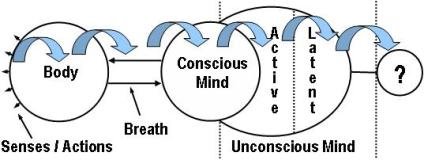
Yoga or "Union" is attained by first training, balancing, and purifying each of the aspects of our being individually, and then systematically receding attention inward through those levels, expanding so as to experience the state of Union, Yoga, Samadhi, or Turiya.

Sunday, March 02, 2008

Center for NonDualism

Purpose of the Center for Non-Dualism: The Center for Non-Dualism is a community for people who share the Non-Dual perspective of Religion, Yoga, and Philosophy. The purpose of the Center is to maintain a loving fellowship and to provide a nurturing environment that is conducive to learning and experiencing the oneness of NonDualism.

Meaning of Non-Dualism: Non-Dualism is the orientation that there is one absolute reality without a second, and that each of us, although an individual person, is one with that reality, just as a wave is not separate from the ocean. The emphasis of our Center is on the practices such as contemplation and meditation which lead to the direct experience of this Non-Dual reality.

Weekly Programs: The Center for Non-Dualism serves the Emerald Coast area of Northwest Florida. Our weekly gatherings are each Sunday from 10:30 to 12:30, with the program itself from 11:00 to 12:00. Our meeting location is the Gardenia Room at Cayo Grande, at 214 Racetrack Road NW, Fort Walton Beach, Florida. A map is on the website.

Invitation: Our view is that all dualistic religions, practices, and philosophies are practical tools that ultimately lead to the direct experience of the Non-Dual reality. All people who share this perspective and approach to life and spiritual practices are welcome and invited to participate in our programs and community. Teachers and organizations with a similar view of Nonduality are invited to network through our community, as friends of the Center for Non-Dualism.

Website:
Newsletter:

Saturday, September 29, 2007

13 Speakers: Swami Rama Yoga Meditation Intensive, India, 10/29/07 - 11/16/07

Following is an announcement about the Swami Rama Intensive in India Oct 29 - Nov 16. This will truly be an exciting and insightful time for sincere practitioners of Yoga Meditation, Vedanta and Tantra in the context of the teachings and tradition of Swami Rama. I personally very much look forward to participating, to helping with the presentations, and to hearing the perspecives of the other 12 speakers (biodata below). This is a rare opportunity for those who attend.

In loving service,

Swami Jnaneshvara

ANNOUNCEMENT

Sadhana Mandir Ashram (Swami Rama’s Ashram) of Rishikesh, India is happy to announce the SWAMI RAMA INTENSIVE program, October 29 – November 16, 2007 at the Himalayan Institute Hospital campus and Swami Rama Center, between Rishikesh and Dehradun, India. Monday through Friday programs will be at the hospital campus and weekend retreats will be at the ashram on the Ganges in Rishikesh.

The SWAMI RAMA INTENSIVE will be a flexible program adapting to the wishes and needs of the participants. However, each daily program will include classes drawing directly on a specific chapter from one of the books by Swami Rama. These presentations will be give by 13
different speakers, who are listed below. There will also be group meditations and self-awareness practices in alignment with the practices taught by Swami Rama.

FOR MORE INFO, RESERVATIONS & QUESTIONS:
http://www.sadhanamandir.org/SRI.htm

BIODATA OF THE 13 PRESENTERS:

Dr Achala M. Singhal, MD, DM, FACC, is a Professor & Head of Cardiology Department at Himalayan Institute of Medical Sciences. Personally trained by Sri Swami Rama in holistic approaches to medicine, Dr. Achala has conducted research on the effects of
meditation and breath control on hypertension and heart disease. Holistic approaches with cardiac patients have helped avoid invasive procedures in many cases, along with complete healing.

Dr. Anil Singhal is Professor of Neurology at HIHT. He received his M.D. in Medicine at AIIMS and did his residency in Neurology in USA. He is Head of the Departments of Holistic Medicine and Neurosciences. He worked closely with Swamiji from the very inception of HIHT.

Dr. M. Ganasan, MBBS, a disciple of Swami Rama since 1990, Dr. Ganasan had a flourishing private medical practice in Malaysia. Currently Director of the Combined Therapy Program at HIHT, Dr. Ganasan focuses on Yoga Therapy based on Patanjali’s Yoga Sutras and Swami Rama’s teachings. This highly individualized program takes the participant through physical postures, breathing exercises, cleansing practices, mind/ energy/body integration, leading to Self Awareness and ultimately to living in the universe itself.

Dandi Swami Jnaneshvara Bharati, MA, a disciple of Swami Rama, provides spiritual counseling and teaches practical aspects of Meditation, Yoga, Vedanta, and internal Tantra. Swami J is widely known for his passionate dedication to the teachings of Swami Rama,
which he expounds in a simple, efficient, and easy-to-understand manner.

Dr. John Clarke, M.D. is former Chairman of the Himalayan Institute of the USA, Dr. Clarke received his M.D. degree from Harvard University in Family Practice, Internal Medicine and Cardiology. He is also an Emergency Room physician and resides in Boston, Massachusetts, USA.

Dr. Kathleen McKeehan is a Nursing Advisor at the Himalayan Institute Hospital Trust. She received her Ph.D in Nursing from Case Western Reserve University, USA. She is a certified Hatha Yoga teacher and worked with Swamiji in USA before coming to India in 1992.

Ms. B. Maithili, a disciple of Swami Rama, is serving the Himalayan Institute Hospital Trust in the capacity of Director of Rural Development Institute.

Dr. Prakash Keshaviah is Director of Nephrology and an Honorary Professor of Physiology at HIHT. He received Post-Graduate Degrees in Biomedical Engineering and Physiology from the University of Minnesota, USA. His training with Swamiji dates back to the late 1960s.

Dr. Ravindra Kumar Mamgain, experienced in Ayurveda for over 20 years, is an Associate Professor of Ayurvedic Medicine, Himalayan Institute of Medical Sciences, and consultant physician at the Department of Ayurveda,

Dr. Sunil Saini M.B.B.S., M.S. ( Surgery), Fellow UICC, Senior Consultant Surgical Oncology , Professor of Surgery. Dedicated to the service of cancer patients, Dr. Saini was inspired and trained by Swami Rama to focus on holistic approaches, quality of life issues and stress management in cancer control and research.

Mr. Vijay Dhasmana, member Presidential Body, is respected for his dynamic leadership and management abilities. Having recently translated several of Swami Rama’s books from English into Hindi, Vijay is very conversant with Swamiji’s teachings.

Dr. Vijendra Chauhan is a Professor and an eminent Surgeon of Orthopaedics in HIHT. He is also a member of the Presidential Body. He received his MS in Orthopaedics from Mahatma Gandhi Institute of Medical Sciences. Hehas been associated with Swamiji since 1994.

Dr. Vishnudas K. is an Ayurvedic physician with over 15 years of experience in Ayurveda. He currently runs the Ashtavaidhya Parampara Ayurvedic center in Rishikesh, and has an Ayurvedic clinic at the Himalayan Institute Hospital Rishikesh Extension branch.

http://swamij.com/

Monday, September 03, 2007

Mandukya Upanishad on Om Mantra: Yoga Meditation (VIDEO 9:30)

Mandukya Upanishad on Om Mantra: Yoga Meditation (VIDEO 9:30)

This video is on the Om Mantra as outlined in the Mandukya Upanishad. The pinnacle of the wisdom of the ancient sages is contained in these terse twelve verses, which outline the philosophy and practices of the Om mantra (written as either AUM or OM). The three stages plus the fourth of Om mantra are central to Yoga Meditation, Advaita Vedanta, and Samaya Sri Vidya Tantra.

VIDEO (9:30 minutes):

Click here for VIDEO at YouTube:
http://youtube.com/watch?v=fNruveUaeRg

Click here for VIDEO at MySpace:
http://myspacetv.com/index.cfm?fuseaction=vids.individual&videoid=17293431

http://www.swamij.com/

Monday, August 20, 2007

Can a Christian Practice Yoga? (VIDEO: 5:45 minutes)

VIDEO (5:45 minutes):

CAN A CHRISTIAN PRACTICE YOGA?
Swami Jnaneshvara Bharati

Can a Christian Practice Yoga? It depends on the individual Christian and the extent of his or her deep longing for union or Yoga that may lie deeply in the mind and heart. If one practices physical posture without the higher goals, it can hardly be called Yoga. It may be physical fitness, but it is no more Yoga than drinking wine and eating bread alone are Christianity.

Click here for VIDEO at YouTube:
http://www.youtube.com/watch?v=xQXAYioSQ9I

Click here for VIDEO at MySpace:
http://vids.myspace.com/index.cfm?fuseaction=vids.individual&videoid=16255136

http://www.swamij.com/

Saturday, August 18, 2007

Spirituality and When it Dawns - Swami Rama

http://www.swamij.com/swami-rama-spirituality-dawns.htm
From The Essence of Spiritual Life
By Swami Rama
ISBN 8188157015
Reprinted with permission of the Publisher
Copyright Himalayan Institute Hospital Trust
http://hihtindia.org/
Swami Rama Foundation
http://www.swamiramafoundation.us/

SPIRITUALITY AND WHEN IT DAWNS
Swami Rama

It is not necessary to retire to a monastery to lead a spiritual life. We cannot escape from our inherent longings or postpone our utmost needs. In addition to the primitive urges for food, sex, sleep, and self-preservation, there is a higher urge to merge with God. We cannot be at peace unless that inherent divine urge is fulfilled.

We all want to experience the all-pervading, omnipresent God from which the entire universe, as well as each individual, has evolved. Direct experience of the truth that each of us originates from God, and ultimately will return to God, makes us secure, happy, and strong.

Today millions of educated men and women are suffering from a lack of purpose. Lacking also in self-confidence, young girls and boys have become victims of dissatisfaction and frustration. Along with a worldly education, we must provide some spiritual education.

Human beings have done research on three levels so far on mind, energy, and matter. Yet we have not found out a way to live in peace, to attain happiness that is free from all problems, pains, and miseries. We study this “ism,” and that “ism.” We go to this church and that temple. We seek advice from this swami and that other yogi. Yet, we have not found the way.

The whole confusion lies in the fact that we do not understand ourselves, and yet we introduce ourselves to others. We are strangers to ourselves yet we get married, have children, have homes, and claim to love others.

That training that helps us to attain a state of happiness free from pains and miseries, is missing from our daily life. Nobody teaches us how to look within, how to find within, how to verify within.

We are taught to know and see things in the external world, but this inner training and knowledge is missing. When we graduate with flying colors from colleges and universities, we find that we are still unsatisfied. The big questions about life still remain questions:

Who am I? From where have I come? What is the purpose of life? Where will I go from here?

Modern education helps us to understand and to be successful in the external world, the world of means. It doesn’t help us to know ourselves.

To know yourself, you don’t have to go anywhere. If you want to know yourself, you have to follow the path from the grossest to the subtle, then to the subtler, and finally, to the subtlest aspects of your life. You have to search for yourself, because religions do not fulfill this need.

I am not telling you not to follow your religion, or not to believe and trust in your religion. Often religions do not answer certain vital questions of life. Religions tell you what to do and what not to do, but religions do not tell you how to be.

No matter how many temples and churches we build, nothing is going to happen unless we accept one principle—that the greatest of all churches and temples is the living human being.

The scriptures say:

"The greatest of shrines is the human body. Look within and find within. There His Majesty dwells in the inner recesses, in the inner chamber of your being."

The day you come to know this, you will be happy. To believe in God is not a bad thing. It is a very good thing, because at least you have faith; but you should not forget that God is within you.

As a part of our educational training, we must define spirituality in its most precise and universal terms. Spirituality means that which helps us discipline our thoughts, speech, and actions, that which leads us toward the center of consciousness, and thereby unfolds our inner potentials.

Education based on such spiritual guidelines will help humanity to become self-reliant, confident, and active in the external world. At the same time, it will enable humanity to broaden its world view, and to become inward to search for the perennial Truth. Only a spiritually based education can bring harmonious balance to our external and inner lives.

Knowledge of theories that prove the existence of God is not as important as learning to discipline oneself, so that God can be experienced directly. Children should be taught how to sit quietly and make their minds one-pointed. Through their calm and one-pointed minds, children can obtain a glimpse of true peace and happiness. We need not force them to believe that there is a God; however, we should provide them with the opportunity to unfold their inner potentials, gain confidence, and become inspired to search for God, according to their own inner tendencies and backgrounds. Children need to cultivate divine virtues within themselves.

That which is purely physical has its limits, like the shell of an egg. Spirituality has infinite horizons and limitless freedom. It is full of knowledge and perennial light, life, and delight. When one is completely detached, one realizes oneself in a wider and deeper relationship with the Universal Being.

When ego becomes aware of something that is higher than ego—the individual spirit, or soul—then spirituality dawns.

Spirituality dawns when individuality vanishes.

http://www.swamij.com/
Wednesday, August 15, 2007

VIDEO Tribute to Swami Rama - Master of Yoga, Vedanta, and Tantra

This video is a tribute to Swami Rama of the Himalayas, one of the greatest teachers of Yoga, Vedanta, and Tantra of the twentieth century. Swami Rama was a master of the Himalayan tradition who taught throughout the world and founded the Himalayan Institute Hospital Trust and Swami Rama University near Dehradun, India, as well as Sadhana Mandir Ashram in Rishikesh, India.

VIDEO (3:53 minutes):

Click here for VIDEO at YouTube:
http://www.youtube.com/watch?v=a8UcrJ19VCU

Click here for VIDEO at MySpace:
http://myspacetv.com/index.cfm?fuseaction=vids.individual&videoid=15863404

http://www.swamij.com/

Sunday, August 12, 2007

Does Yogi Bear have anything to do with Yoga? (VIDEO; 50 seconds)

Does Yogi Bear have anything to do with Yoga?

Have you ever seen the cartoon character Yogi Bear? Did you ever wonder how he got his name? Does it have anything to do with Yoga? Here is the answer!

VIDEO answer to the question (50 seconds):

Click here for VIDEO at YouTube:
http://www.youtube.com/watch?v=_0bAQekvsmg

Click here for VIDEO at MySpace:
http://vids.myspace.com/index.cfm?fuseaction=vids.individual&VideoID=15603522

http://www.swamij.com/